Brigid’s Day at Porirua Cemetery: 31st January – 7th February 2027
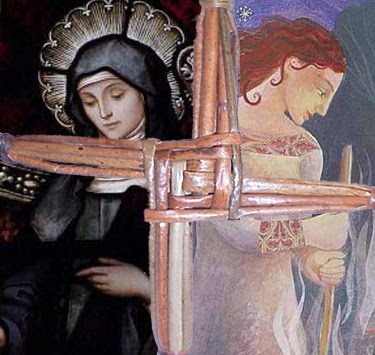
Image Credit: “GODDESS BRIGID” by Galaxis Mist https://celticanamcara.blogspot.com/2010/02/candlemas-imbolic-st-brigids-day.html
With the blessing of Ngāti Toa Rangatira and the support of Cemeteries Manager Daniel Chrisp, on the 31st January 2027 the Irish Communities of Te Upoko o Te Ika and the lower North Island will hang 500 Brigid’s Crosses made of reeds or grasses in the Porirua Cemetery on the white picket fences surrounding the Chapel.
These will honour the unmarked graves of patients of the Porirua Asylum, roughly quarter of whom are Irish people. Historical work has demonstrated that between the opening of the Asylum in the late 1880s into the middle of the 20th century, many asylum patients were buried there without blessing or family, and with no grave markers at Porirua and Whenua Tapu cemeteries.
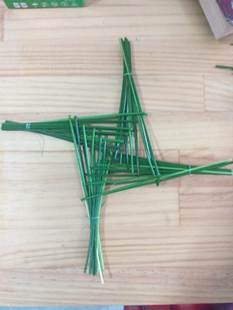
The Brigid’s Cross represents an ancient practice of the Irish to make a simple cross to hang above their doorway or in their window on Brigid’s Eve, 31st January, so she could bless their home as she travelled by and bring good luck to the family for the year.[1]
Irish community member Emma-Jean Kelly explains –
My Great Great-Uncle James O’Grady, originally from Tipperary, lived on a farm in Pahīatua when he was committed to the Asylum in 1903 as a young man. He lived at Porirua Asylum until he died in the late 1940s; his job was to look after the pigs. Three generations later, our family had forgotten he existed until we recently learned his story. We were lucky enough that his immediate family could afford to bring him home when he died, and he lies in the family plot at Mangatainoka with the Kellys and O’Gradys of our clan. Many were not so lucky, and we want the opportunity to remember them and provide a blessing upon their resting place.
Brigid is believed by some to be a Goddess and others to be a Saint. Whichever way you understand her, she was known to look after families, she was called Goddess of the Hearth in a place where a perpetually burning peat fire was the heart of an Irish home. The humble dandelion was her flower.
The New Zealand Society of Genealogists Irish Interest Group Lower North Island are so grateful to mana whenua Ngāti Toa Rangatira for granting our request to honour those in unmarked graves, and Porirua City Councils Cemeteries Manager Daniel Chrisp and volunteer historian Allan Dodson who have worked so hard to find the names of these people. Daniel is working on a permanent memorial with descendants, but we wanted to take some action in the meantime to begin a healing process for those who did not have the love and joys of home where they lived and died.
On the 7th of February we will take down the crosses, and we invite those who wish to take one home for the year to enjoy the blessings of Brigid and our community.
If you’d like to be involved in making Brigid’s Crosses and learning some of the history of the asylum system across the British Empire, please contact Emma-Jean Kelly mjeankelly@gmail.com . Keep your eye on Porirua City Council websites and social media for further information.
If you’re like to try making one at home, check out – https://youtu.be/Yn_MG4HZVOo?si=WHYBsZ_mf5xPYGv5 For our project, please note Ngāti Toa Rangatira have requested we only use natural materials to avoid pollution. Thanks!
Special thanks to John Eamon Kelly who helped with the analysis of the names in the Porirua and also Tokanui cemeteries, using Edward MacLysaght’s The Surnames of Ireland (1969).
To view the list of names in unmarked graves please visit the Porirua City Council Cemeteries website: https://poriruacity.govt.nz/services/cemeteries/cemetery-history/porirua-cemetery-and-hospital-history/memorials-for-former-porirua-hospital-patients/
[1] Clodagh Doyle, Keeper of the Irish Folklife Collection, National Museum of Ireland, first published in the Irish Arts Review, Volume 39 (4), Winter Edition December 2022 – February 2023, page 128https://www.museum.ie/en-IE/News/St-Brigids-Day-a-weaving-tradition-of-Celtic-ritu

