Pahīatua Holiday Memories – John Eamon Kelly

Pahīatua Recollections of John Eamon Kelly (JEK), recorded by Emma-Jean Kelly (EJK). This is an edited transcript checked by John. John had written some notes in advance about things he remembered, so occasionally Emma-Jean mentions ‘your notes’ in the interview.

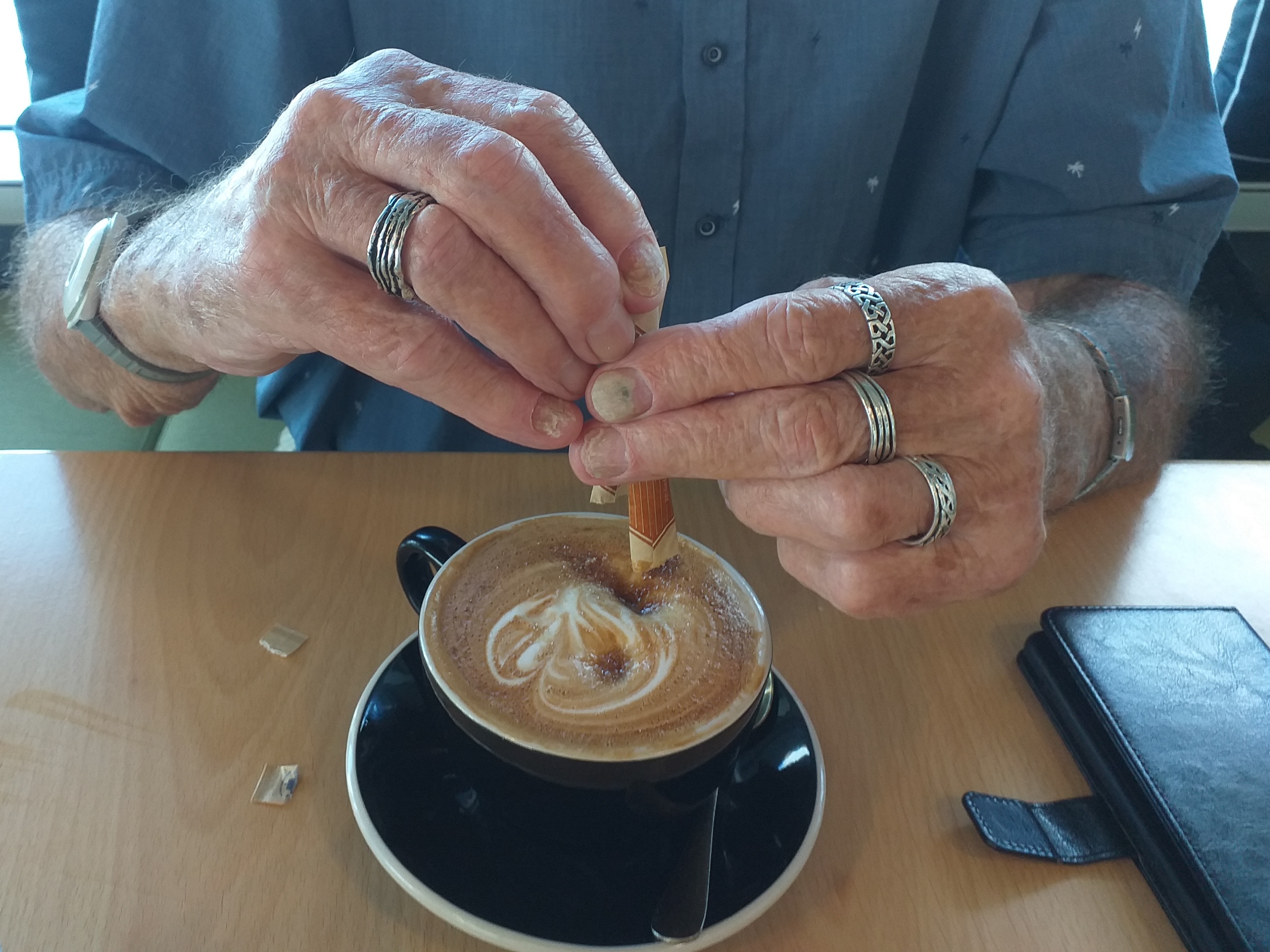
Recorded on 24th December, 2025, at 51 Eskdale Rd, Birkdale, North Shore Auckland, on Zoom H6 with lapel mics. Photo below of John’s hands, putting sugar in his coffee.
Recording One of Two

EJK- Kia ora, I’m here with John Eamon Kelly, my father. My name is Emma-Jean Kelly, and we’re going to chat about Pahīatua where Dad went on his holidays as a youngster. Hello Dad. OK, you don’t want to say hello back? [laughs]

JEK- Oh, hello back [laughs].

EJK- So are you comfortable saying when you were born and where?

JEK- I was born in Christchurch in 1936. My mother lived in Fairfield Avenue, in a two-storey house which we have photos of but of which I have no recollection apart from one visit, one visit when I was taken there by my father when I was an early teen.

EJK- And what did your mother’s family do? What did her father do?

JEK- Mum’s father was an ironmonger, and I believe he built the big iron gates at Hagley Park. He was instrumental in doing that, or his business was, we were always told he built them.

EJK- Nice. And what cultural background was that side of the family?

JEK- I’ve no idea really, except we’ve got photos of musical events, one of my aunts Aunt Mavis, was a dancer, I don’t know who with or if it was only when she was a child. Therre were dress ups, there is a photo of all the children, my mother’s siblings in kilts

EJK- And they definitely had a Scottish background as the grandfather was involved with the Scottish Society in Christchurch I think; I’ve seen a write up in the paper when he died.

JEK- OK

EJK- And what about Grandad Jack?

JEK- What about Grandad Jack?

EJK- You mentioned he’s from Ireland. Whereabouts?

JEK- Portarlington. Which is in County Offaly, straight across from Dublin.

EJK- And he came out in 1926 on the [boat] Athenic, and we’ve still got the passenger list.

JEK- Yes

EJK- And we don’t quite know, do we, how Grandma and Grandpa met but it was in Christchurch?

JEK- Yes.

EJK- I’ve seen a letter now where she talks about slipping a note under his door

JEK- Oh!

EJK- And then they went out, but I don’t know where

JEK- Well,he was, he must have been with the Railways [New Zealand Government Railways] at that time. I presume that was his first job when he came out, with the railway, but why he was in Christchurch I’m not sure.

EJK- And they fell in love and married at Christchurch Cathedral. And who was the first born?

JEK- My sister Maureen. I remember Mum giggling and saying Maureen was born nine months to the day from their wedding night/day.

EJK- I’m trying not to giggle because I think that’s funny. And I know they flatted, well they rented a place in Christchurch, they didn’t own that place, and then you were the next born in 1936 in Christchurch. How long did you all stay there?

JEK- I believe I was 18 months old when they moved because Dad was moved by the Railway, moved to Petone in Wellington, I presume they stayed at a railway house but they could have stayed with Dad’s brother Mick and his wife Frances.

EJK- And what did Mick do for a living?

JEK- Mick was an engine driver [for the Railways]. His connection with the Railways must have been what caused my father to become a railway person.

EJK- And were there any other family members in New Zealand at the time or Grandad’s time that you know of or knew of as a child?

JEK- Aunty Lizzie, one of my father’s sisters must have been on the farm in Pahiatua by then.

EJK- And so that became a place for family holidays.

JEK- Yes

EJK- Do you know around about what your earliest memories are of going to the Pahīatua farm?

JEK- No, ah, I don’t, I don’t know how old I was even, but because Dad was on the Railway we had holidays in Thames, Te Puru Bay, and once we had a holiday in Bowentown past Waihi where we saw a whale, a beached whale. Because there was no road then the taxi had to drive up the beach.

EJK- Was the whale still alive?

JEK-I don’t know, the taxi didn’t stop!

EJK- So Grandad was on the Railways so you had these holidays. Did that mean you had free railway travel?

JEK- Yes,I think so

EJK- Was there a Railway bach you stayed in or did you just rent one?

JEK- Rented like other people I think, the Railway free travel just used to get us there and back

EJK- Right. And when you went to Pahīatua how did you get there?

JEK- We went by train, and my Uncle Colin, Lizzie’s husband would pick us up in Palmerston North. I don’t think the train went to Pahiatua ever when we went there. So we were always picked up by him and driven through the Mangatainoka Gorge which is now no longer a road, the road is at the back of the hills now

EJK- What did Uncle Colin drive at the time do you remember?

JEK- No, he did have a converted Model AA was it, the big car, I don’t think he drove us in that because it was the truck, we thought of it as the truck which was used for farm stuff

EJK- And that was a bit of a legend wasn’t it? Did he cut off the back of the car?

JEK- Yeah, it was a, you’ve seen photos of the car Aunty Lizzie used to drive, that was the car that was converted by taking the back off.

EJK- So that’s the car that Aunty Lizzie learned to drive in?

JEK- Well I don’t know if that was the same car, they could have changed cars over the years, but that’s the one I remember, though I can’t remember what she actually drove, what she drove us into Pahīatua in. [Dad and Emma-Jean subsequently discussed this. EJK was referring to an incident in the newspaper where Lizzie and Jack’s Aunty Bridget Kelly was accused of obtaining driving lessons from the local car dealer for her niece under false pretences (apparently she promised to buy the car after the lessons were completed but didn’t). But this was in the 1920s, so we concluded it probably was not the same car.]

EJK- So Aunty Lizzie, Grandad Jack had a lot of siblings in Ireland, was she younger? I can’t remember.

JEK- Yes, I think she was, I’m not sure. You’ll have to look at that photo there [points to the family portraits on the wall]

EJK- And we know she came out because the other relative that had come one generation before, or was one generation older, was Uncle William Kelly, so Grandad Jack and Lizzie’s Uncle, and Mick’s, had come out earlier and he’d married into the

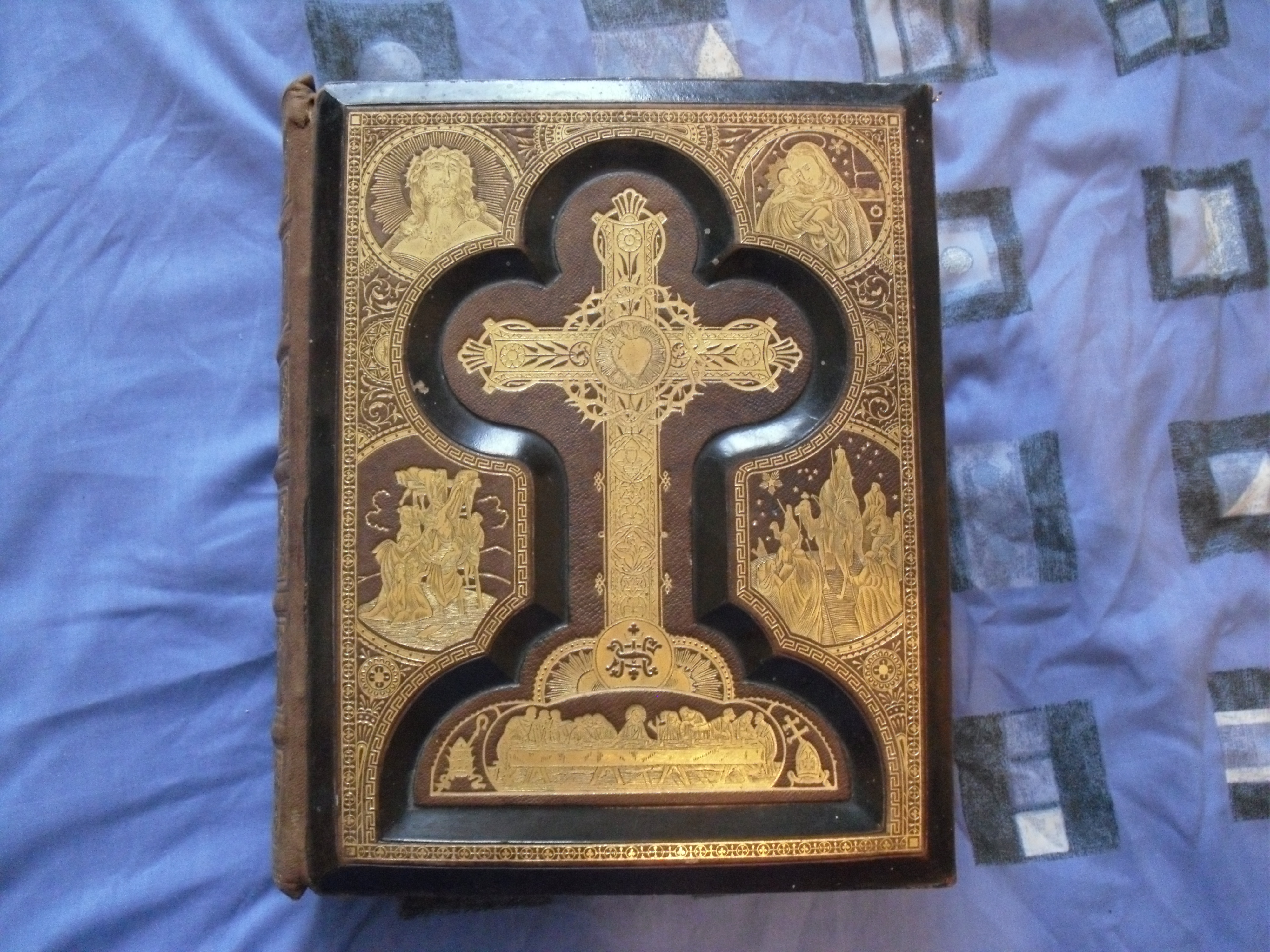
Pahīatua family, hadn’t he? So we’ve got the big family bible of his wife Bridget O’Grady and they married in 1891. So he was out there on the farm, but you would never have met because he died in the ’20s.

JEK- Yes, and I’m old but not that old [laughs]

EJK- [laughs] Not that old. So you were on the farm in the next generation of the Kellys, but there had been previous generations on the farm. Did you ever hear stories about the previous generations on the farm?

JEK- No,the only connection to the farm [from the old days] was a lovely photo of Bridget Kelly [née O’Grady] in the chook run

EJK- Where she’s crouched down with the chooks. So speaking of animals, I imagine there were a lot of animals you interacted with, and I’ve seen some beautiful photos with various dogs.

JEK- It was a dairy farm, I can’t remember how many they had there, but each cow had its own name. Nice names. So Colin knew them all. So presumably knew their milking patterns, those cows were milked twice a day

EJK- What happened to the cream?

JEK- The cream was separated, mechanically separated, and the skim milk was piped down to the pig pen for the pigs.

EJK- What happened to the rest of the milk, did that go off in a truck?

JEK- That would go, I presume it was picked up every morning, I can’t remember that, or every night, perhaps twice a day, I don’t know.

EJK- Yeah. There’s pictures of horse and cart and pictures of cars from the time you were on the farm, but I guess it was all mechanised by then, did they still have horses around when you were a child?

JEK- Yes, Uncle Colin had a draught horse which we rode occasionally, and we occasionally got scraped off under the macrocarpa trees when the horse didn’t want us on its back.

EJK- Did you ever get hurt falling off a horse?

JEK- No, we must have bounced. Once that horse was up the road near Colin’s mother’s place which was probably a mile and something up the road, and we were on it, can’t remember why, with Colin, and the horse refused to go over a little bridge, over a stream, just refused to go. Presumably it thought it was unsafe

EJK- So it didn’t stop so fast you went over the front?

JEK- It was a draught horse, they’re not quick, just ambled along and stopped

EJK- So Colin’s Mum was Annie Dron and she lived along the road as you say. Did you see much of Annie, was she an older lady when you knew her?

JEK- Oh yes. An old wrinkled face, but very pleasant. We did go up there occasionally I don’t know whether we saw inside Annie’s house. But the original farmhouse [on Middle Road, where Lizzie and Colin lived] was quite small, and interesting for kids because to get to our bedroom we had to go out the front door. Then turn to the right, along to a bedroom. In that bedroom was an old-fashioned dresser with several little drawers that pulled out, and they were full of Lizzie’s…what is the word I’m looking for?

EJK- Accessories?

JEK- Accessories yes, I’m sure they weren’t called that then, but brooches and strings of beads we’d find quite fascinating. And that room, that house also had a very sloping roof in the kitchen, so it sloped towards the bench; I wouldn’t be able to stand up at the bench now. And there’s a great story of Aunty Lizzie getting frightened by a mouse, and she hoisted herself up by her hands and, not stood, balanced, on her arms on the bench while a mouse [laughs] was running round, and I can’t tell you the end of the story because I don’t know what happened.

EJK- Wow [laughs]

JEK- I remember my mother being there once and there was a step from the living room into the passage, and Mum had been knitting, probably Fair Isle something because she had enormous numbers of balls of wool, and as she was going to bed, she put her foot up the step and dropped a ball of wool, and it took her several minutes to get up the steps because every time she picked up one ball of wool another one would fall down. And I can’t remember if there was any drink involved, but I suspect not as I can’t remember anyone drinking then, so Mum was just giggling her head off while dropping these balls of wool and picking them up

EJK- Were you helping her?

JEK- No, I was too little

EJK- And giggling

JEK- I’m sure I was

EJK- So if you had to go out the front door to get to the bedroom, was there a balcony all the way around?

JEK- There was a porch to the door. So, if you came out the front door and turned right there would have been a porch and a door facing. And I don’t know what happened to that house, did they actually demolish it? I don’t know, they may have done so, because Mrs Dron’s house in Short Road, a mile and half away, whatever, was moved, towed across the fields and placed upon the site of the original house, and that’s still the current house

EJK- Yes,it’s interesting. I think the house was demolished, because I’ve read the records about when the house got moved across, and Colin Dron had to contact the Crown to get permission to move the house because it was still Crown land and leasehold, and you wouldn’t have known, had any sense that it wasn’t their farm, I mean it was their farm but on a 999-year-lease.

JEK- No I didn’t know. I do remember Colin telling us that instead of going on the road obviously, you couldn’t take the house on the road, along the road and do a ninety degree turn, then along Main Road, so from Mrs Dron’s place it was taken diagonally across the fields. And Colin’s story was that he was busy cutting fences and moving posts and he kept looking behind him and he said the house was catching up! [laughter]

EJK-So that was the 1960s and that was Mrs Dron’s house, so Mrs Dron had died?

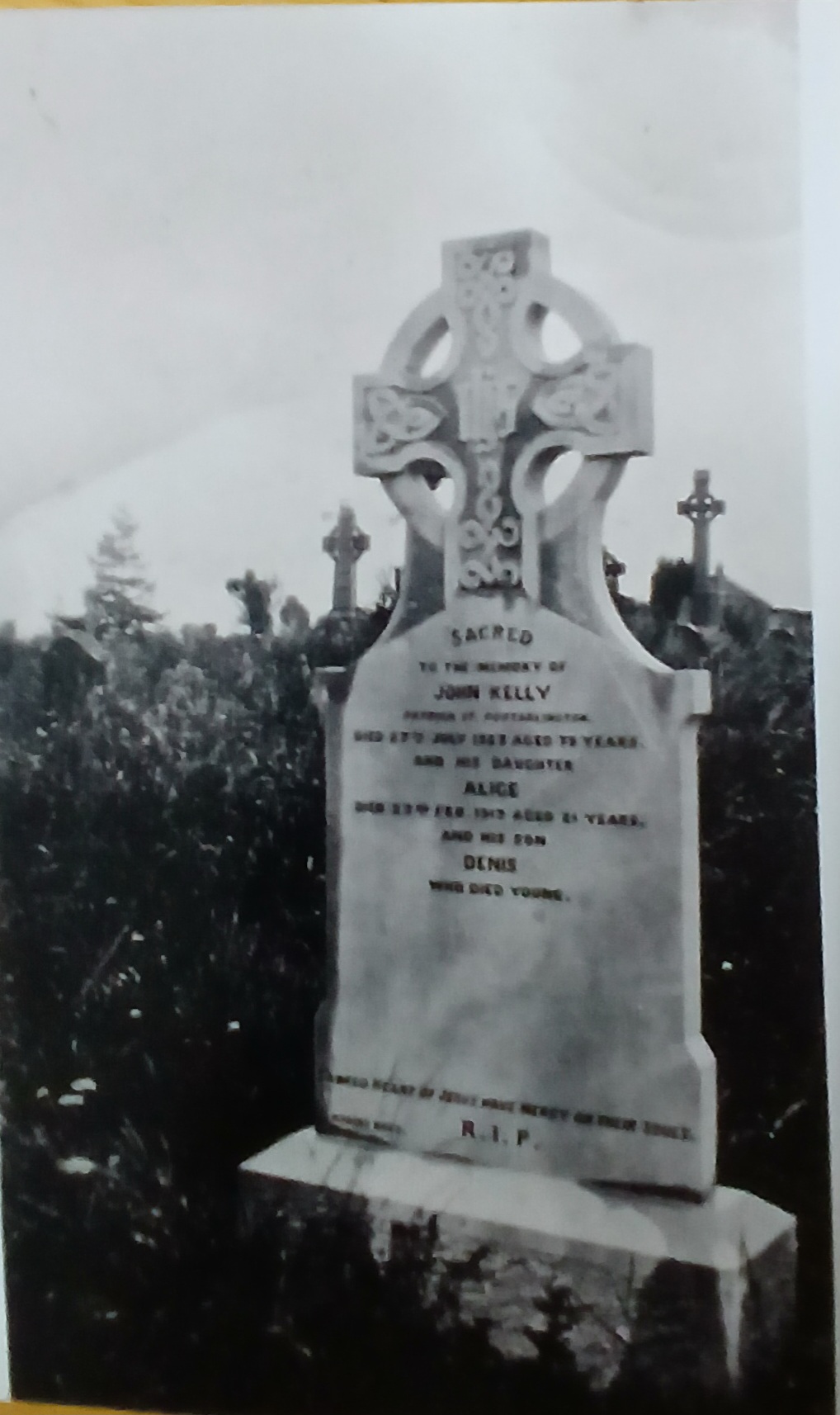
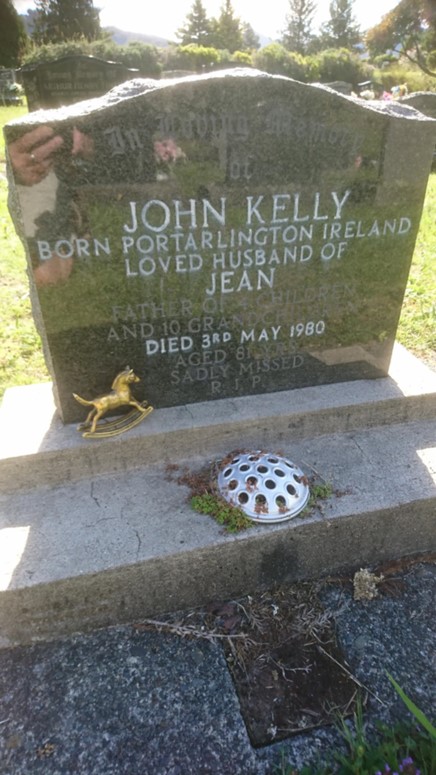
JEK- Presumably. In fact, I’ve just seen her gravestone [gestures to pictures] so you can look in there

EJK- OK. I was talking to Aunty Carole, your little sister, and she said one of her fondest memories of Mrs Dron was eating her Chocolate Marshmallow Shortbread Slice.

JEK- Oooh!

EJK- She said it was absolutely delicious and homemade and she can still remember the taste

JEK- Wow, that’s nice

EJK- My friend Ed and I made it and it’s delicious, and I sent photos to Aunty Carole in South Africa

JEK- Lovely!

EJK- Do you remember any particular food on the farm?

JEK- No, but going back to Mrs Dron’s house. My older sister Maureen was climbing over one of the fences which had a lot of barbed wire in it and she fell and gashed her leg quite badly. I can’t remember who wrapped it up, I don’t think we had to get hospital care, so Mrs Dron or Aunty Lizzie must have patched her up

EJK- Gosh. And so you and Maureen were closer in age

JEK- Yep

EJK- And then there’s a gap until the next kids. How long is it?

JEK- Probably four or five

EJK- And then you have Mike and Carole. Do you remember playing with them on the farm or were they so much younger you didn’t play together?

JEK- I can’t remember them there actually. Though there are photographs of Michael on the horse, but no, I can’t remember that. So presumably I played with Maureen more than the others.

EJK- Yes,that’s the impression I have. There’s a photo of you as a late teenager in very nicely tailored long trousers and Carole is on the horse behind you. She definitely looks a lot younger than you in the photo. But she talks about looking up to you and Maureen.

JEK- Yes, she’s eight years younger than me and born on my birthday.

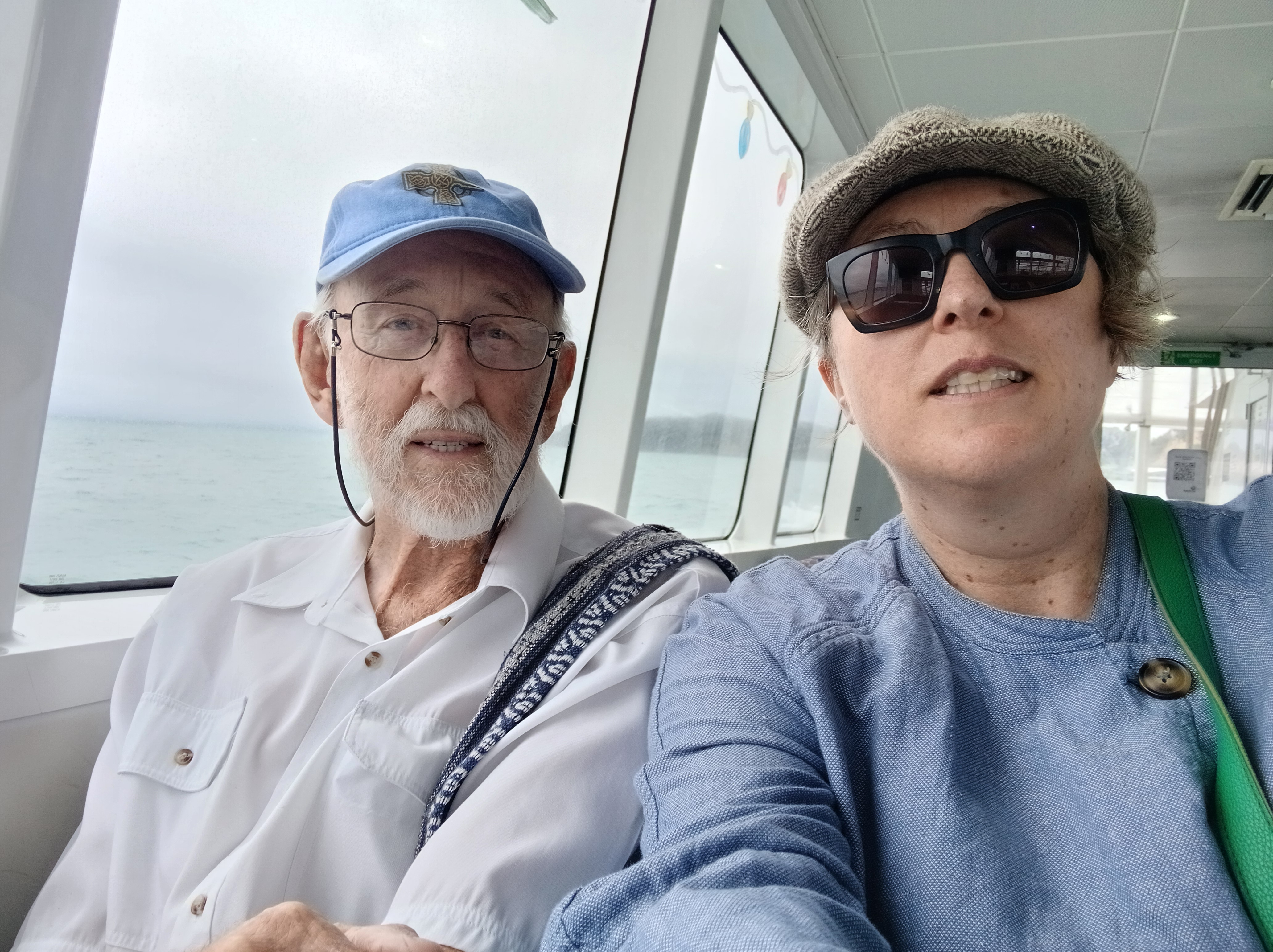
Below is a photo of John and Emma-Jean, Christmas 2025 on a ferry from Birkenhead to Auckland City.
Recording Two

EJK- So we’ve talked about some of the animals. Where did the dogs live?

JEK- Dog. I think it was dog singular, and the dog lived in the kennel outside, never an inside dog, because they were working dogs.

EJK- So did they corral cows?

JEK- Yeah,sorry what did you say, corral?

EJK- Corral, is that not the word?

JEK- That’ll do, yep.

EJK- I heard rumours that there were possums on the farm.

JEK- Oh,yes. At the front of the house there were huge macrocarpa trees. And I climbed up there once, there was a sort of a, you could find hollows in there. And I climbed up on this particular occasion and turned around and there was a possum, about two feet away from me, staring at me. I cannot remember what happened. Whether he screamed or I screamed, whether he ran away or I did. Or if I jumped out of the tree, I do not know

EJK-[laughs] so there were macrocarpa trees right in front of the house?

JEK- No, on the front of the property

EJK- So did that mean it was dark in the house?

JEK- Not that I recall

EJK- Because it’s all open now, it’s hard to imagine

JEK- It was in front of the garage. The garage door, to drive into the garage would have been level with the macrocarpas presumably

EJK- Right, and they would have been a wind break on a piece of big flat land

JEK- Yes

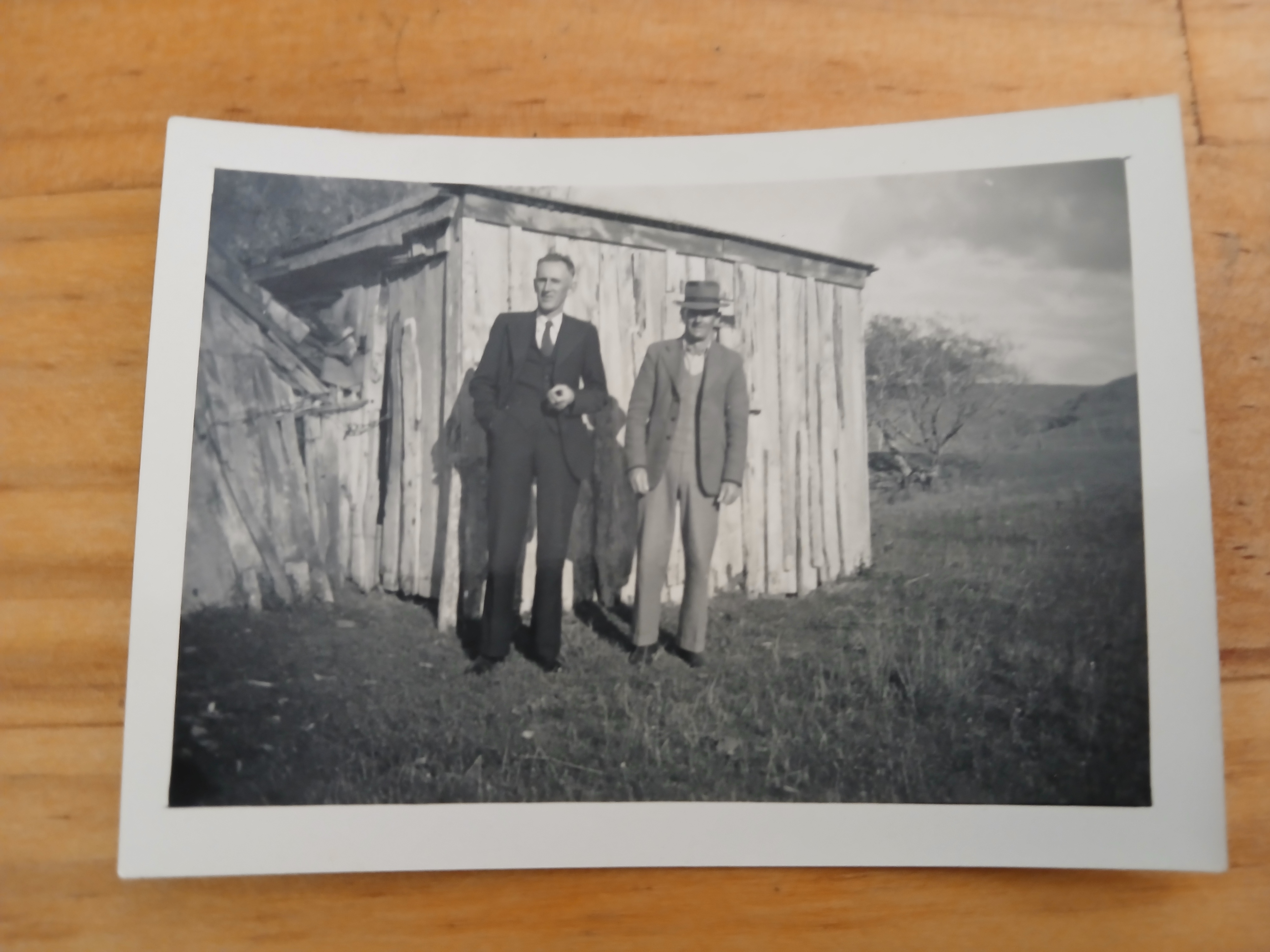
EJK- And there were buildings that changed on the property I suppose, but over the years there are photos with Grandad Jack in front of one particular building which seems to be an old shed? 

JEK- yes, but that was in Short Rd. That was the original Dron house when Annie Dron’s parents lived there. It’s bigger than it looks in the photos, that was their home.

EJK- And so that’s on the Short Road property?

JEK- That’s where Mrs Dron used to live or nearby, it’s on the corner of that road, Dad visited it once or twice because there’s photographs of him there

EJK- And there’s photos usually with Dron family

JEK- Always with Dron family

EJK- So Grandad, did he get to have holidays with you there or did he just come for visits while he was working?

JEK- Yeah, he used to, I think he used to come. I don’t know, maybe he did send us for holidays while he was working.

EJK-He must have had holidays sometimes, you mentioned the baches, so sometimes you’d go altogether

JEK-Yeah, but we’re talking about Pahīatua, I can’t remember Dad being there but he must have been, but not for holidays perhaps, I don’t know

EJK- Did you notice frogs or insects?

JEK- There was a paddock across the road which had frogs in it yes, we could hear them at night.

EJK- So were there swampy bits?

JEK- Well, enough for frogs

EJK- Who owned the property across the [Middle Road] road when you were a kid, do you know?

JEK- No, I don’t know. I don’t know whether it was part of Jim’s corner or not

EJK- Yeah, because we’ve been told later that was Jim’s Section but you didn’t know that at the time

JEK- I don’t know if that was the other side of the main road though

EJK- The other side of Middle Road?

JEK- That’s where the swamp was

EJK- OK. To town, to town with Aunty Lizzie. So did you go to town when you were on the farm?

JEK- Yes. I don’t know how often we went to town, not very often. But Lizzie would be dressed up, as women did in those days, there was a picture theatre there, and I seem to recall it was the old style, you know, with all the curtains going up and sideways, and lots of coloured lights before the film. But mainly Lizzie went there to do her shopping I suspect. But I don’t remember her buying groceries, that was long before supermarkets of course.

EJK- Mm, the farm can’t have been completely self-sufficient.

JEK- As I say, I can’t remember her buying groceries. We would have had milk from the farm, meat from the farm, and there must have been a vegetable garden somewhere or other, but I can’t remember where it was.

EJK- Yeah, because we’ve got letters from your Mum describing the food she brought home from the farm.

JEK- Yes, I just can’t remember where the garden was

EJK- And fruit. Do you remember fruit trees?

JEK- No

EJK- You weren’t so aware of gardens then or there wasn’t much of a garden. What about other neighbours, do you remember neighbours apart from the Drons?

JEK- The next people up the road were Mr Anderson who married Mrs Anderson [laughs], she was a town woman and all I can remember about her was she never went out on the farm and she wasn’t happy living on a farm, and that’s all I can remember about them, I was pretty young. And the next place up the road was the Pilkingtons. They were a fairly well-known family in the area. Mervin was the son, the same age roughly as my older sister, so he used to come down and play with us occasionally, and I gather he died when he was about forty. I don’t know what of.

EJK- Any other neighbours you remember?

JEK- No. And they weren’t close neighbours. The Andersons would have been half a mile down the road perhaps, and another half a mile to the Pilkingtons. My Uncle was friendly with the people behind on the main road

EJK- Were they the Letts?

JEK- The Letts, yes

EJK- And there’s a note you wrote about exploring the bush behind the Letts?

JEK- Yeah, it wasn’t Colin’s property I know, we used to go up a hill and there was a tree there, in the bush. I don’t know if we put our initials on it or not, on the tree, but we always felt we were doing something illegal up there so it had that thrill of illegality

EJK- [laughs] Were there creeks or rivers or streams you used to play in?

JEK- Yes, the creek ran through Colin’s property, it must have gone under the road, I can certainly remember it, but I don’t know how it got under the road, it must have gone under somehow or other. But occasionally Colin would bait pins I think and we’d try to catch eels in the creek. I was forbidden to go on my own and of course did on one occasion and slid down the bank and ended up inches away from the water unable to move, and eventually extricated myself without getting wet.

EJK- So you didn’t yell for help?

JEK- Good heavens no

EJK- Would you have been in trouble if you yelled for help?

JEK- Quite possibly yes, or my sister would have laughed and pushed me in, I don’t know

EJK- Was Maureen prone to teasing?

JEK- Yes

EJK- In a nice way or a mean way?

JEK- Both

EJK- OK [laughs] that sounds like my sisters. The other neighbour story you told me that I found quite sad was about a neighbour further away that you remember vaguely visiting as a child, and the child [there] was not well and didn’t really leave the house much.

JEK- Yes,they weren’t neighbours at all. They were the Diamond family who lived in Pahīatua, and they must have been friends with Lizzie because we went round there once or twice. And the boy who was possibly my age or younger at the time was…unaware. So I don’t know whether he was deaf, dumb and blind, yes he was blind, and they’d just kept him at home, they hadn’t tried to get him educated or any special care so his behaviour when we were there was bizarre, because he didn’t know any different. I’m not going to describe it.

EJK- What did you think as a child?

JEK- Don’t know. I was younger than a teenager possibly.

EJK- And did anyone talk to you about it?

JEK- Nope

EJK- Gosh, it’s funny isn’t it? Because we tend to talk about everything, you probably think I talk about more than I should, but in that circumstance as a child I would have asked heaps of questions.

JEK- Well I got the impression because maybe I asked that he hadn’t been educated in any way. So perhaps I asked. Perhaps I was told, I don’t know.

EJK- Did you know, growing up, anyone in Pahīatua who was different or mentally unwell or did you hear stories of people who were different?

JEK- No, not at all

EJK- So overall, what was it like being in Pahīatua for you as a kid?

JEK- Oh, it was lovely. It was always summer, we were able to, probably when we were older, we were able to go down to the Mangatainoka River to swim, that was, I don’t know whether we walked or took a bike, it was a mile or two, past the main road. Other activities, I can’t really remember really.

EJK- Do you remember eating?

JEK- No

EJK- You mentioned in your notes a smoked ham?

JEK- Yes, Colin being a farmer, he’d obviously killed a pig and smoked it, and it was hanging from the ceiling in the living room. We never got to eat it.

EJK- So was it curing? How long did it take to cure?

JEK- Yes,I don’t know.

EJK- I would have been slobbering over it. Did you go out and have a look at the milking, or help with the milking?

JEK- We did when we were younger, but as we got older we didn’t for some reason. I don’t think we actually helped with it, we would probably get in the way. But I do remember the cat having milk squirted into his mouth, or her mouth.

EJK- You’ve written a note about haymaking too

JEK- Well that was a big thing every year. And all the people in the area helped everybody. I think there was probably one haymaking machine, and that was, I don’t know, loaned around. I remember Colin being concerned one particular year because all the hay was out in the field drying and if hay gets wet and it’s stored it spontaneously combusts because the heat builds up inside it. So you can’t store it once it’s wet and possibly you’d lose a lot of hay before it was put away.

EJK- Gosh, yeah, so much depended on the weather. And was the toilet outside or inside?

JEK- The toilet was outside, you had to walk outside to it. All the photos of kids are always outside a shed at the back of the farm, that’s the toilet. It can’t have been attached to the sewage system now that I think about it. The seat was more than a yard wide with a hole in it, and it had been there so long it was full of borer holes which was quite fascinating while you were sitting on it

EJK- So was it a long drop?

JEK- It must have been. It certainly wasn’t on town sewage. But I can’t remember it having to be emptied, so I really don’t know.

EJK- And you don’t remember a smell? You stood beside it for photos.

JEK- No. You didn’t stand beside, next door to it, I don’t remember a smell.

EJK- I was also wondering about accents. If you remembered different people having different accents, or if they all sounded the same to you?

JEK- Well Lizzie had a very strong lrish accent.

EJK- Stronger than Grandad Jack?

JEK- Oh yes. Well, she didn’t have as much contact as he would have had in cities.

EJK- So her accent stayed the same. Did Annie Dron have an accent?

JEK- Not that I recall

EJK- She was NZ-born but had Scots and Norwegian parents [she was a Larson before she married]. And you knew there was some kind of Scandinavian link but you didn’t know what it was. How did you know that if she had no accent?

JEK- I have no idea

EJK- And then when you and I looked up her Ancestry records we found her parents were Norwegian immigrants who came to take down the Seventy Mile and Forty Mile Bush

JEK- Yes

EJK- What might Aunty Lizzie’s attitudes to politeness have been? Were there types of behaviour which she thought should be different around men and women for example?

JEK- I do remember when she was, she must have been making beds in our bedroom and Mervin Pilkington was in the room as well, and she didn’t, she didn’t want him there but she certainly wasn’t going to say so. So when her back was to him she was mouthing at me that he shouldn’t be there. And being a little bastard at the time I said ‘what are you saying Aunty Lizzie?’

EJK- So did she think it was improper?

JEK- Yes, indeed. It was the same as having to wear a hat when you went to town and possibly gloves, though I don’t remember that.

EJK- Do you remember anyone who wasn’t white in Pahīatua?

JEK- No

EJK- Were you kids ever allowed on the train on your own?

JEK- We went on our own from Wellington, I can’t remember going from Frankton [Junction, another railway settlement the family lived in out of Hamilton]

EJK- What’s it like when we’ve been back to Pahīatua recently for you?

JEK- Well it’s interesting because some things are the same and some are not. Where the Dron house was there is nothing recognizable; a few years ago there were fences and a chimney I recognized, but not anymore. And I don’t even know what that land is used for, if it’s still a small plot or an acreage or not.

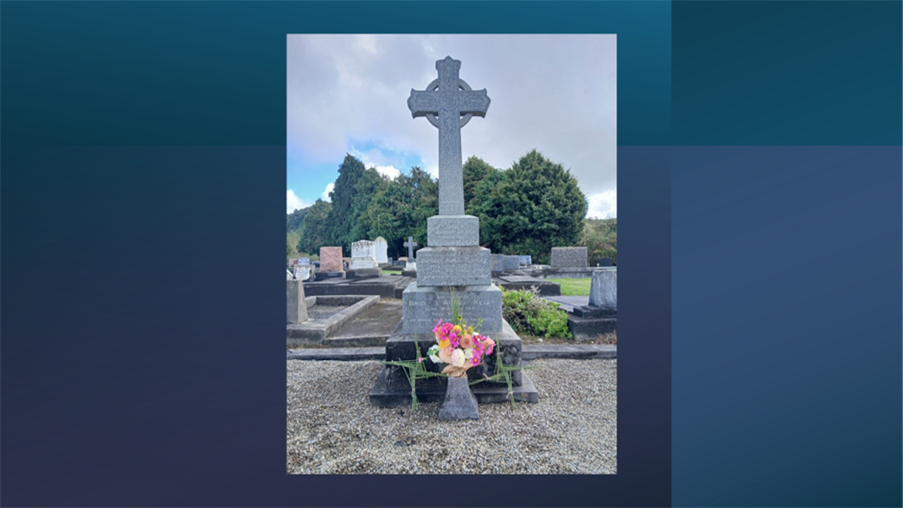
EJK- And the other thing we always do is go to the Mangatainoka Cemetery. Can you just describe that, the grave and who’s there?

JEK- Well there is a big family grave, it’s not a Kelly one really, Dad’s Uncle is there, the family…

EJK- William Kelly married into

JEK- So there’s a big big tall grave which presupposes if that’s the word that they had money as it’s a big memorial

EJK- Christian Irish Catholic look. So there’s Brigit O’Grady the Widow, the mother who came over with her children Bridget and James, there’s William Kelly, our relative in there as well, that’s everybody as well isn’t it? But the Drons are not in the same grave, they’ve got a more modern grave further along.

JEK- Yes,and I think Annie Dron’s grave is in there [at Mangatainoka] as well but I’ve never found it.

EJK- Was there anything else you wanted to talk about?

JEK- No, that’s it.

EJK-Thank you, there was lots in there I hadn’t heard before.

Finding our family in the archives – James O’Grady and the Asylum

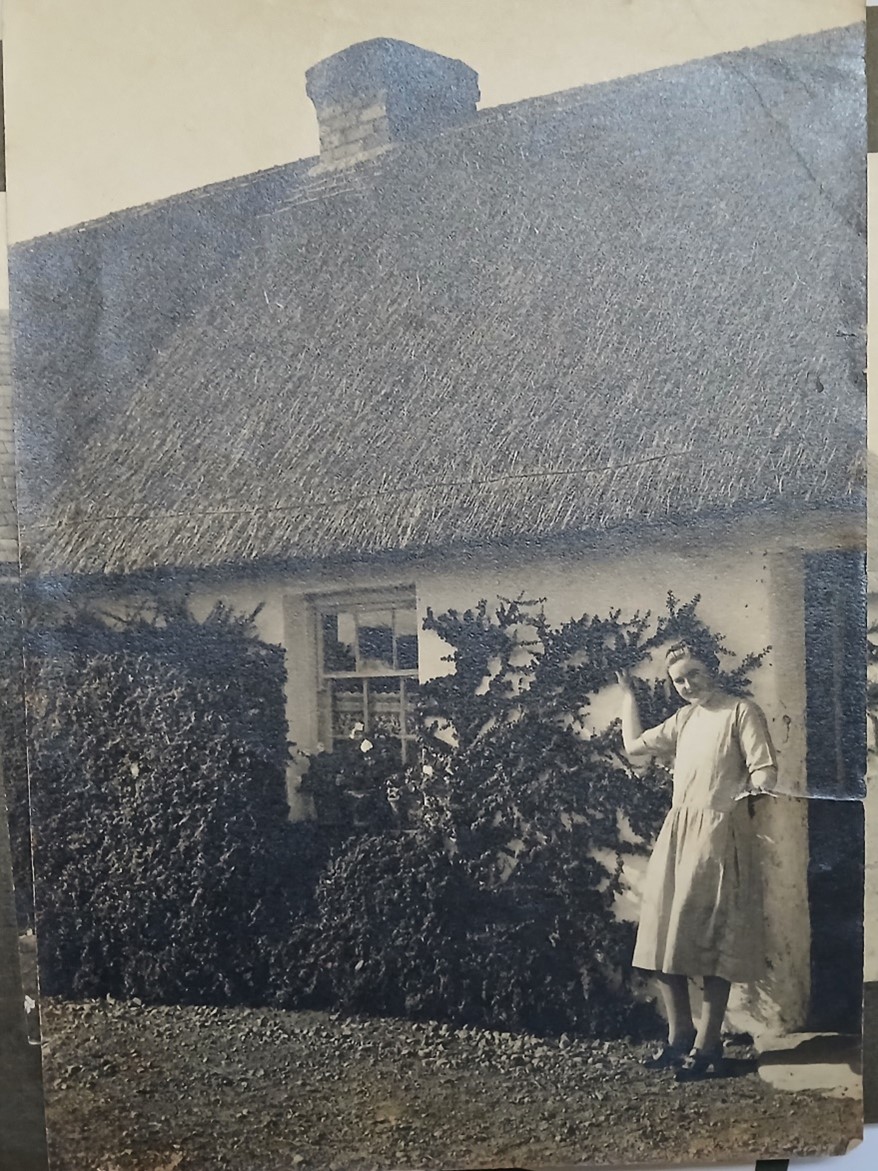
Great Aunty Bridget Kelly nee O’Grady at the Pahiatua family farm (DATE)

This is a talk I gave to the Irish Interest Group, Lower North Island of the New Zealand Genealogical Society on a very cold Saturday, 7th June 2025 at Tawa, Te Whanganui a Tara, Wellington. I refer to ‘Maureen’ and ‘you’ a few times in the recording; this was my fellow speaker, who presented just before me.

In 2016 Christopher Van Der Krogt wrote, ‘In an influential 1990 study of the Irish in New Zealand, Donald Haman Akenson noted exceptionally high rates of delinquency among Irish-Catholic immigrants in the 1880s. The Irish-born made up only 8.9% of the population but 27.0% of convicted prisoners in 1886. At the same time, Catholics (half of whom were Irish-born immigrants) amounted to only 14.0% of the colony’s population but 34.4% of prisoners convicted that year.’ (p.90)

‘Delinquency’ in this context refers to deviance from accepted societal norms, which could result in institutionalisation in asylums, reformatory institutions, reform schools or prisons. It has been said by Elizabeth Malcolm that ‘wherever the Irish went their propensity to be committed to psychiatric institutions became notorious’ (p.91).

Van der Krogt argues that five factors seem to come into play for the Irish-Catholic community and their ‘deviance’:

  1. Disengagement from the Church
  2. Being an unskilled or semi-skilled labourer
  3. Being single and a drinker
  4. Poorly integrated into the new society
  5. Being type-cast[1]

My Great Great Uncle James O’Grady was indeed a single Irish-Catholic who was considered deviant enough to be incarcerated in first the Auckland and then Porirua asylums, from 1903 until his death in 1942 (strangely, his grave says he died in 1949, and I’ll come to that in the challenges of our research). However he doesn’t seem to fit many of the factors Van der Krogt describes, and may simply have been genuinely mentally ill. James and his family were regular church goers, he lived in a supportive family environment. He was single, but no evidence has come to light of him being an excessive drinker. The family seems to have been integrated into their close-knit community of small farm lease holders, and it’s not evident that he was typecast.

Perhaps Sean Brosnahan’s talk last year to this group offers us further insight into James’ situation – he was born not long after the famine, his father died young and was a shoemaker, so presumably the family were not wealthy, they were assisted immigrants coming out to Napier in 1884. Perhaps intergenerational trauma was indeed part of his legacy.

It is very difficult from our perspective today to understand the emotional, psychological or even sometimes physical truths of people who lived one hundred years ago, since we may have very little written or documentary evidence, and what we have will have been created from a perspective we may not even understand. For example, I grew up agnostic, and so the role of the spiritual or supernatural realm, so important to many people today and perhaps more so in the past, in a world where mental health was often understood to be affected by the spiritual world, is quite hard for me to understand. It’s often an accusation made against people looking into the past, that we judge from our own time and lens. But of course we do, so we must just say so up front. I can only speak from my perspective today.

Some recent authors have provided thoughtful insights into mental health and the societal context of the past, during the time James was considered ‘deviant’. In Jacqueline Leckie’s new book Old Black Cloud: A Cultural History of Mental Depression in Aotearoa New Zealand [2] for example, she describes Dr T.G. Gray, the incoming Director-General of the (New Zealand) Mental Hospitals Department, who was arriving from Scotland in 1911. He noted  the ‘singularly isolated position which the mental hospitals occupied in the public life of the country … their drab and dreary structure and routine symbolised the hopelessly pessimistic attitude of the public towards the prognosis of those who had to be admitted’.[3] I would add to that the pessimistic attitude of many of the staff who worked with those patients too, including that of Dr Gray himself, and we will return to him.

Jacqueline Leckie’s historical analysis begins 60 years before Gray’s observations, and her work offers a foundational history of (largely) state-based asylum care over the next century and more. While politicians wring their hands today as they discuss the new reports tabled in pParliament from the Royal Commission of Inquiry into Abuse in Care, rhetorically asking how abuse in state institutions could possibly have happened, Leckie demonstrates how, almost from its inception, the state system designed to support those in mental distress was vulnerable to the vagaries, fashions and dispositions of those in charge, and the ‘hopelessly pessimistic’ attitudes of the general public (and I would argue) some politicians, and even public health professionals to issues of mental health.[4] [5]

Alexander McKinnon’s family history, Come Back to Mona Vale, offers a companion piece to Leckie’s work, a detailed case study to complement her overview. McKinnon’s grandfather, Tracy Gough, was a successful Canterbury businessman who was also the purveyor of an early electric shock treatment machine. Electric shock treatment was used on his own daughter in a private hospital after an older sibling had died of an overdose of cardiazol and repeated high doses of paraldehyde, both administered at Christchurch’s Sunnyside Hospital in 1941. Chillingly, paraldehyde and unmodified electric shock treatment both featured in the (now officially acknowledged) torture of young people at Lake Alice, near Marton, in the 1970s, as outlined in one of the Abuse in Care reports.[6] One of the reasons why I’m interested in history is because I have the perennial hope that we may actually learn from the past – but the evidence suggests otherwise.

So if you’re interested in learning more about the state of asylums in Aotearoa New Zealand in the 1800s and early to mid- 1900s, both Jacqueline Leckie’s broad and comprehensive analysis and Alexander McKinnon’s more focussed family story provide excellent insight.

The other great source of information on general attitudes to difference in the early twentieth century is covered in Oliver Sutherland’s wonderful book about his father Ivan, Paikea: The Life of I.L.G.Sutherland.[7] Ivan was a philosophy and psychology lecturer who argued against the fashionable eugenics movement, which advocated sterilisation of children and adults who displayed various differences from the understood norm of the time, and also pushed for permanent segregation of ‘mental defectives’, which was essentially what happened in the series of government asylums around the country. In fact Dr Theodore Gray, who became Inspector-General of Mental Hospitals in 1924 was a psychiatrist who advocated for a eugenics board which could make decisions about sterilisation – including of children of ‘defectives’. He insisted on excluding psychologists from the eugenics board on the basis that they had nothing to offer, and his recommendations were indeed part of the Mental Defectives Amendment Bill 1928 (pp. 138, 139).

Oliver Sutherland has been very involved in the abuse in care issues of the 1970s to 1990s, and was a key witness at the Royal Commission Hearings. In the subsequent reports of the Royal Commission on Abuse in Care, we are able to see much about the treatment of those in state care including asylums in more recent times, since the report covers the 1950s to 1990s period (though they did allow testimony outside that, including my Great Great Uncle’s story). But the reports also refer to earlier treatment of patients, and we can see how many unmarked graves for example remain at former asylum sites around the country in those reports, including Porirua which is my focus today –

The Inquiry has not only received evidence of people dying in care but also of people in care being buried in unmarked graves. Tokanui (which Maureen has covered) at Te Awamutu, Sunnyside Ōtautahi Christchurch, Cherry Farm and Seacliff Ōtepoti Dunedin, Sydenham Cemetery includes Sunnyside patients, Westland Hokitika (Seaview) – not all hold sufficient records to conduct a search and confidently say where unmarked graves lie or who is in them.

Porirua Cemetery is the exception rather than the rule in the Inquiry. At Porirua Cemetery, a public cemetery, there are 2,046 unmarked graves identified in total. One thousand, eight hundred and forty of these are for Porirua Hospital patients. Porirua City Council also identified 847 unmarked graves at Whenua Tapu Cemetery and 25 at Pauatahanui Burial Grounds.[134]

I would like to acknowledge the work of Daniel Chrisp, Cemeteries Manager at Porirua City Council who has done much of the work to cross check records and create lists which are now available to the public. He is working towards a memorial for those in unmarked graves, and wants descendants to help decide what form the memorial will take.

Before reading the reports from the Commission, I had no idea how common it was for relatives not to claim their family members when they died at the asylums. James’ body was brought home at his death. Some commentators state that families were uncaring when it came to mentally ill family members, but the societal pressure to conform, and the shame of having a family member incarcerated was very real and serious during the time period my Uncle was in the asylums, but according to Hilary Stace, families often weren’t told when a patient was moved due to lack of beds in an institution, and they weren’t always notified when someone died.[8] Daniel Chrisp told me you could have a patient from Christchurch, and there if there weren’t enough beds there and they’d just move them to Auckland because it was more convenient for the hospital. I would surmise Irish immigrants were wanting to fit in tended to keep their head down and conform within their own parameters, and, like other families were not encouraged to visit their family members in the asylums. I imagine some did not have the means – my immediate Kelly family for example didn’t get a car until the 1950s, so travelling out of town to an asylum would have been challenging, as they were often deliberately not put on public transport routes according to another excellent book Wendy Hunter Williams, Out of Mind Out of Sight: The Story of Porirua Hospital, Porirua Hospital, Wellington, 1987 – even though it’s older, I would recommend it.

The other thing I would say is it can be frightening to have a mentally ill family member, and you may just believe that the best thing you can do is keep away. In my Uncle’s file it says he held his brother in law William up by the neck and threatened to kill William’s wife, my Uncle’s sister Bridget (that’s Bridget with the chooks) and their Mum, Brigid O’Grady. I can understand why they might not go to see him after that, and they would not have had any understanding of mental illness in 1903. They may even have believed the devil had taken him.

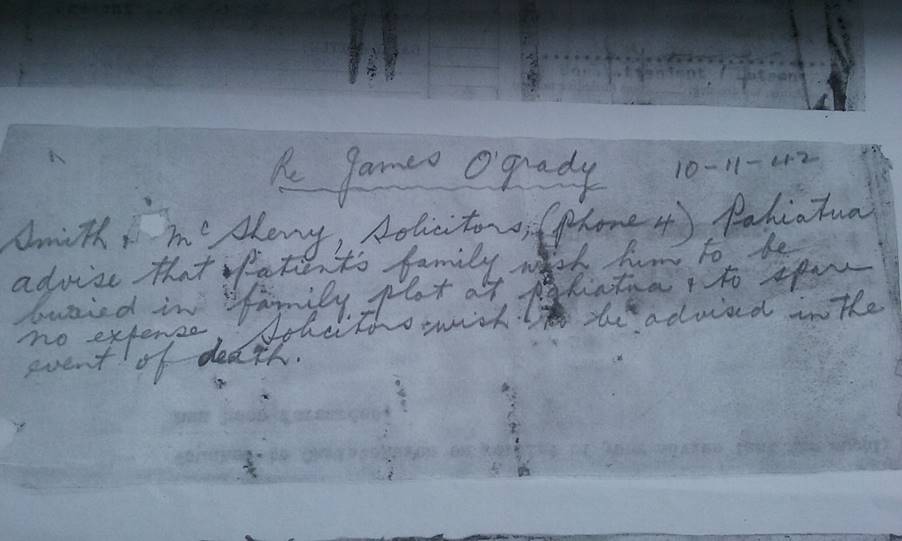
So when my Great Great Uncle James died, his family, my family, the next generation from those who incarcerated him, sent a telegram to the institution urging them to ‘spare no expense’ in sending his body home, and he indeed lies in the family grave with his sister, mother and brother in law at Mangatainoka (image).

I don’t even know if Lizzie Kelly and her husband Colin who sent this letter had ever met James. This is from James’ CCDHB file. It’s extraordinary, with the original letter from his doctor explaining why he is being put in the asylum, describing his behavior in the asylums, and then from the time he is moved to Porirua, what he does there – he works on the farm, with the pigs who receive national awards, he doesn’t speak much. The entries become very repetitive, just one or two lines over the years, it’s very sad to see how these busy staff didn’t have time to sit with patients (in fact, nurses could be told off for sitting with patients as that was considered shirking their real work, such as polishing the floor). I have written a whole article on this file, which is freely available online, called ‘The Disappearance of James O’Grady’. So that’s James’ end, but what was his beginning? How did our family find out about this relative we had never heard of? It all started, as these things often do, with an Aunty who wouldn’t take ‘no’ for an answer.

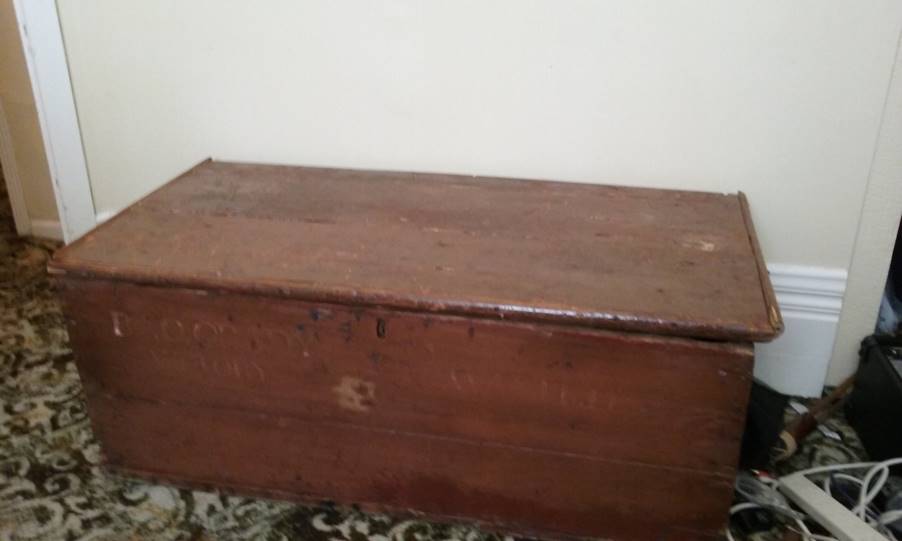
Bridget O’Grady’s travelling trunk came into my possession in the summer of 2017. It came from an early twentieth-century farmhouse at the intersection of Pongaroa and Middle roads, near Pāhiatua in the Tararua region. The current owner of the farm, Graeme Vial, had a chance encounter with my Aunt Carole, who was visiting Aotearoa for the first time in 40 years from her home in South Africa. She walked around the farm, telling Vial stories based on her childhood memories. She recalled riding horses and helping out around the farm, and told him where various farm activities had occurred.

 At the end of their meeting, Vial decided to show Carole a series of photos that had been left at the house by the previous owners, members of our extended family. He also offered to give a trunk from the old farmhouse to the family member who lived nearest to the property: me.

My great-great uncle William Kelly married Bridget Agnes O’Grady in 1891, and was the first of the Kelly side of my family to move to New Zealand. When she was about 20, William’s niece Lizzie moved from Ireland to Pāhiatua to help on the farm after William died in 1922 – she moved in 1923, a significant year for Ireland – the end of the Civil War. Lizzie became a farmer, and eventually married the boy down the road, Colin Dron, uniting two farms and two families – and more recently we’ve learned that Dron is a Scottish name, but Colin’s Mum was a Larsen (or originally Larsson from Norway; her grandfather was one of many Scandinavians to come to the area to clear the 70 mile and 40 mile bush). I’ve also learned from Celine Kearney’s Southern Celts: Stories From People of Irish and Scottish Descent in Aotearoa, Mary Egan Publishing 2023 p.38, that back in Scotland, it was common for Norwegians and Scots to marry (geographically it makes more sense!).

My Aunt Maureen, my father John and their younger siblings Mike and Carole told their children stories about the Pāhiatua farm in the time Lizzie and Colin ran it, and the photos help bring the story to life. As children they had visited in the holidays; it was a stable place in a changing world which included the second world war, which started three years after my father was born, with all the rationing and other difficulties it entailed for those who stayed home. There are some wonderful descriptions in letters from my grandmother Jean to my grandfather Jack about the milk, cream, tomatoes, and other fruit and vegetables she brought home from the Pahiatua farm in a time of austerity. (family blog photo)
So I’m showing you here photos from the family blog I’ve started to share these stories and memories as my Irish diaspora family live across the world, from South Africa to London to Australia and New Zealand (we are true colonials scattered across the Empire). My Dad, Aunty and Uncle who are kids in these photos are now in their eighties, and it’s important to me as the next generation to accurately record their stories before they pass away.

My grandad (my Dad’s Dad) Jack worked on the railways, and although that meant they lived in railway houses so had security of housing, they moved on the whims of the bosses – Christchurch, Petone, Frankton Junction, Ngaio and Taumarunui – during their childhoods. So the stories of the farm were precious memories or holidays and freedom and fun. Uncle Michael has recently talked about driving a tractor called Fergie at the farm; Dad remembered riding a horse which suddenly refused to cross a bridge; and Aunty Lizzie was a favourite relative of both my father and my mother. In our house in Auckland there were photos of Mum and Dad with Aunty Lizzie at the farm when my parents first married in the late 1960s. As kids we were fascinated by photos of her and her huge bosom and deeply lined and wrinkled face.
Back in 2017 my friend Ed and I drove from Wellington to Pāhiatua to meet Graeme Vial and his partner and pick up the travelling trunk connected to an extended family I had heard about but never met. When I initially saw the trunk I felt disappointed, as it had a broken lid and was empty. Nevertheless, Ed and I put it in the car and then sat down for a cup of tea with the people who had kept it for all those years. Our host Graeme’s previous partner was Ngāi Tahu. Before she died, she had been the keeper of whānau, hapū and wider iwi stories, ngā kōrero tuku iho we call them. From her, Graeme, who is Pākehā, had learned to understand the importance of ngā taonga tuku iho, treasured things passed down. For this reason, he had kept the photos and the trunk in the hope that one day the family of the previous owners of the farmhouse would be ready to take on these treasures.

He also kept them because of his own unusual inheritance. When my Great Aunty Lizzie (née Kelly) and then twenty years later her husband Colin Dron, the owners of the farm, died, they left the property to Graeme’s parents, because they had helped Colin keep going as he grew older. Graeme remembers, as a teenager allergic to cow’s milk, being given the job of milking Colin’s animals when he was unwell – and the skin complaint that was the inevitable consequence. During a recent visit to the wonderful Pahiatua Museum, locals told us that Graeme’s Mum would make a meal for my Great Uncle Colin every night after his wife Lizzie died. I feel glad the family that helped Colin and Lizzie received a reward for their many years of effort and support.

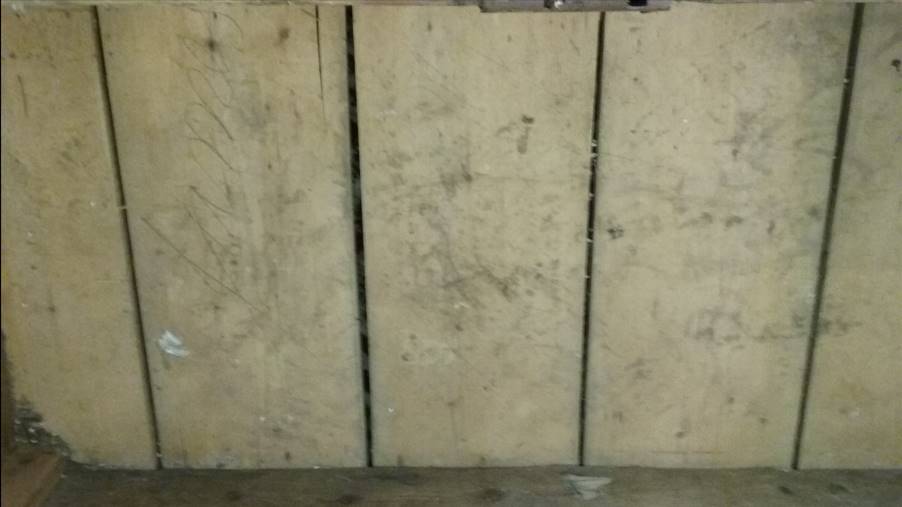
Back home after our trip to Pāhiatua, I reassembled the pieces of the trunk. As I did so, I noticed that inside on the bottom boards, written in pencil in a child’s hand, was the name ‘James’. (Image on slide)

Who was James and how did he fit into the family? No one in my immediate family knew.

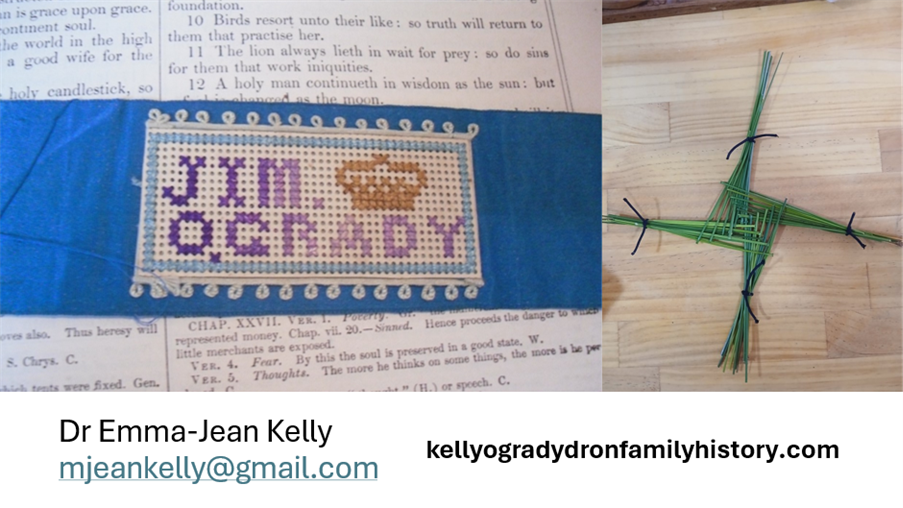
But suddenly things in our family house, like this embroidery in the huge old Catholic family bible, made a little more sense: A blue and purple label with text

AI-generated content may be incorrect.

Like many other Pākehā families, we do not reflect on the journeys of our ancestors, nor do we tell our children about them. But the older we have become, the more we have begun to talk. This is particularly so at funerals and in times of crisis, such as family members becoming ill; stories have been shared, and so slowly I have learned about our family’s origins.

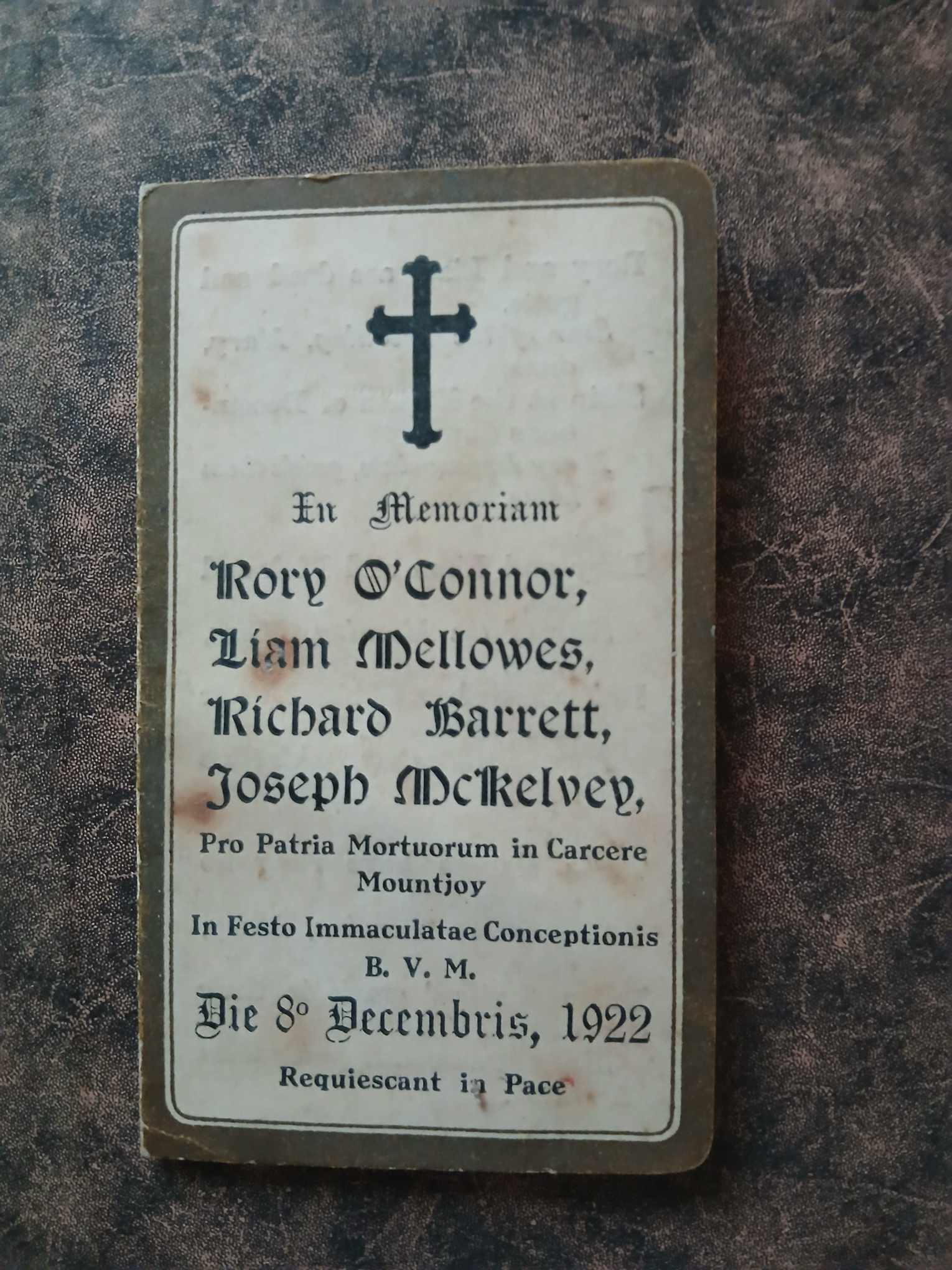
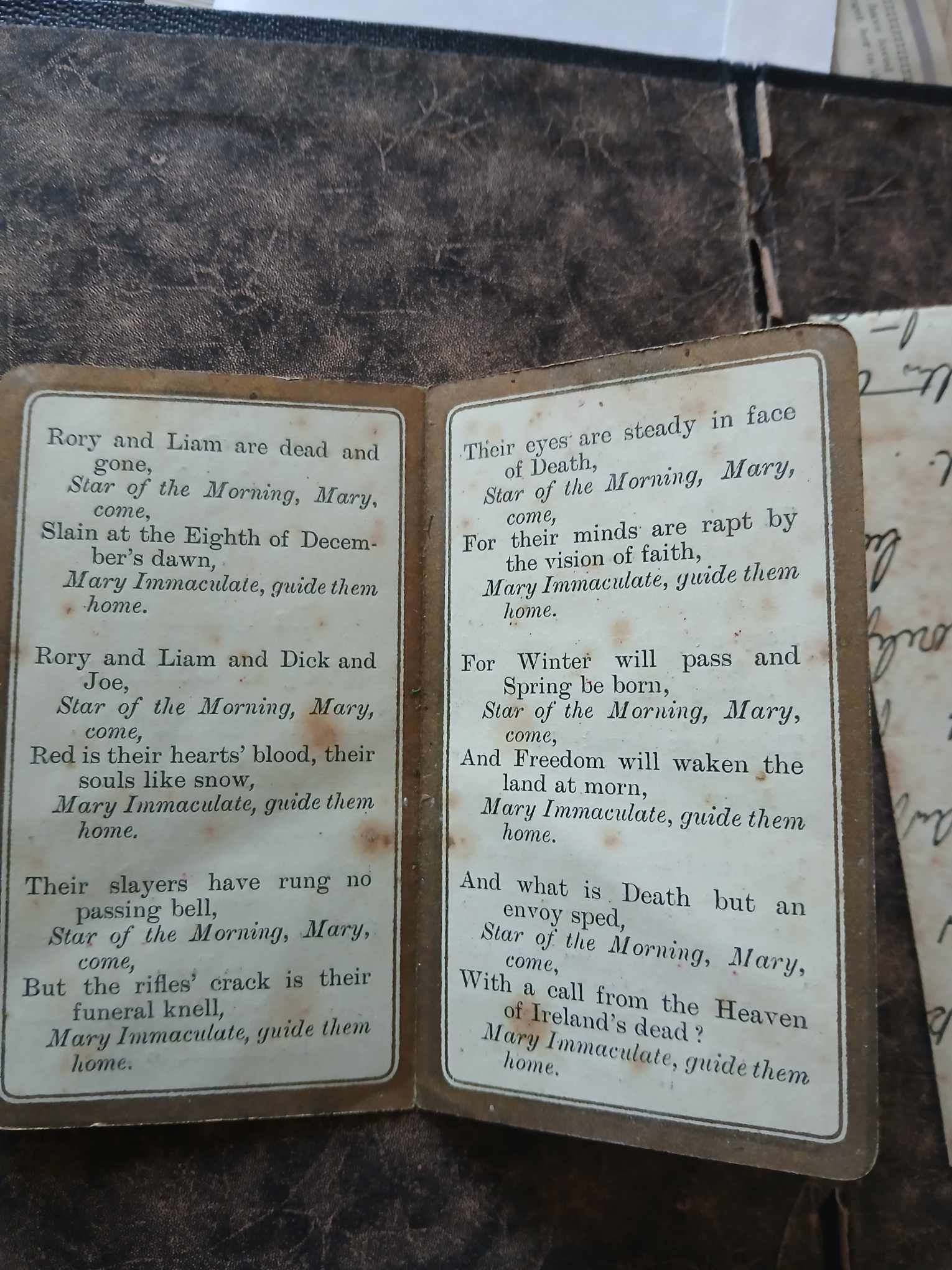
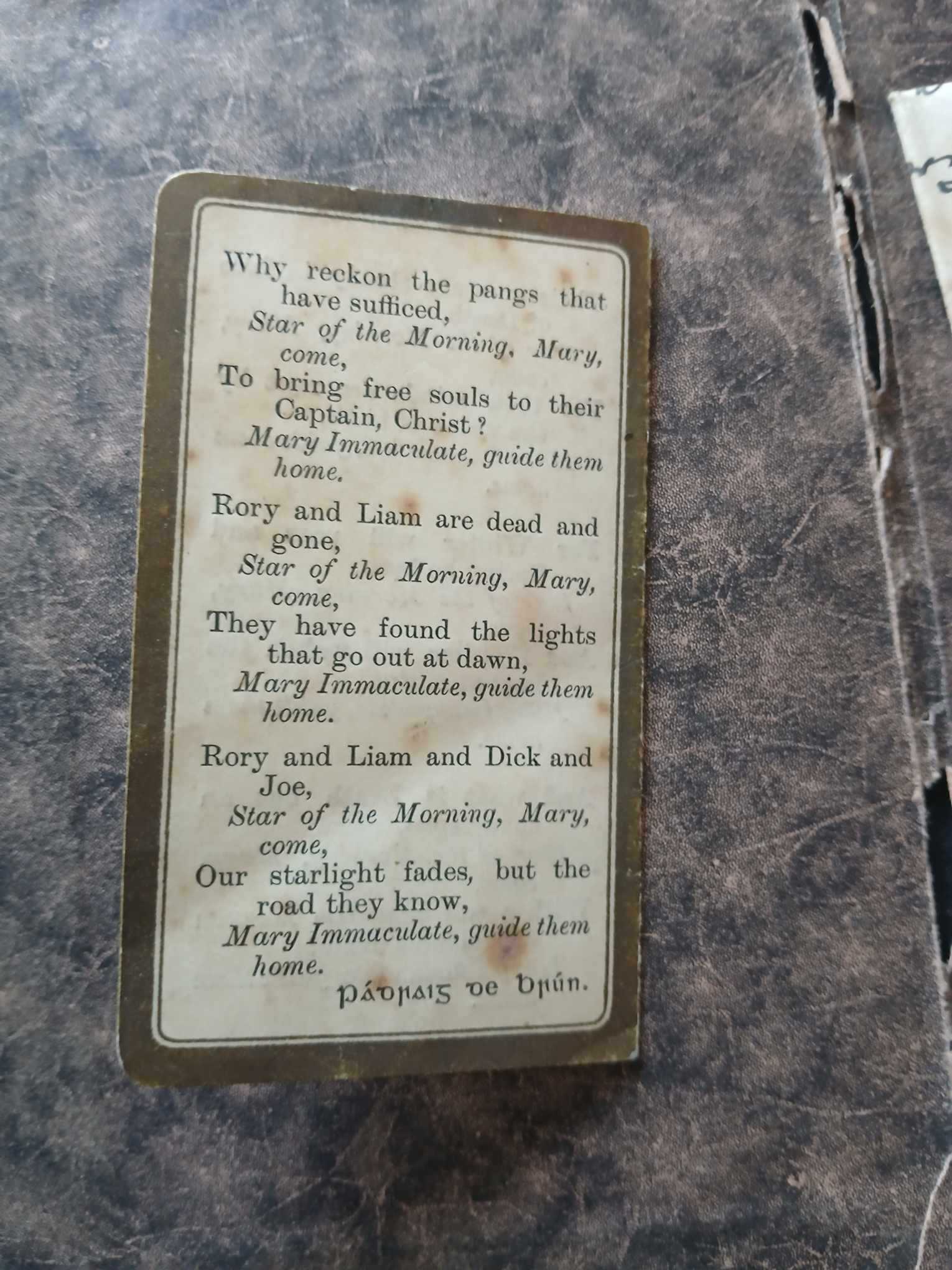
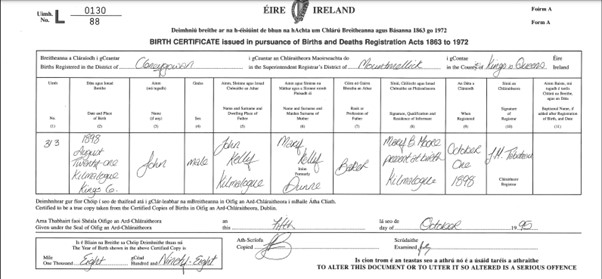
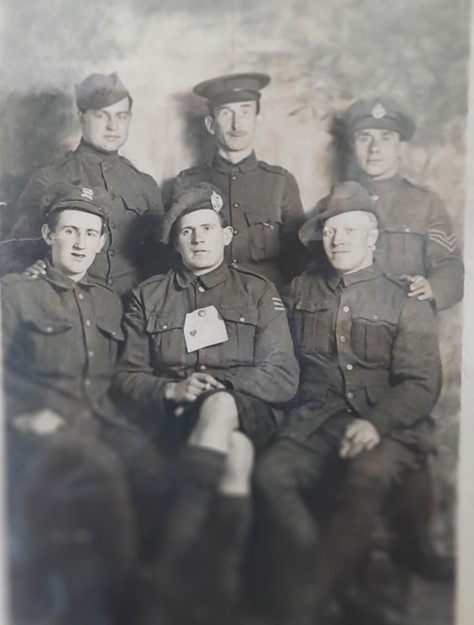
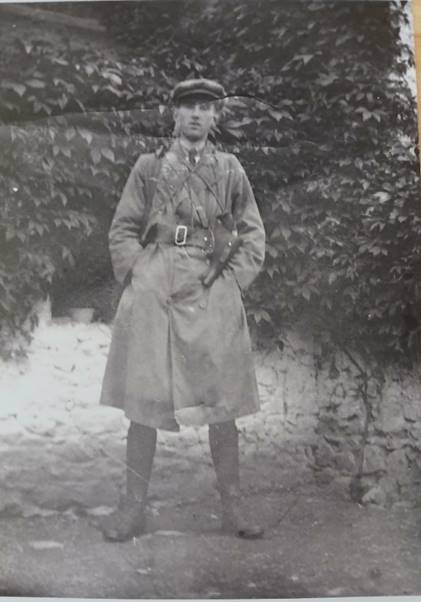
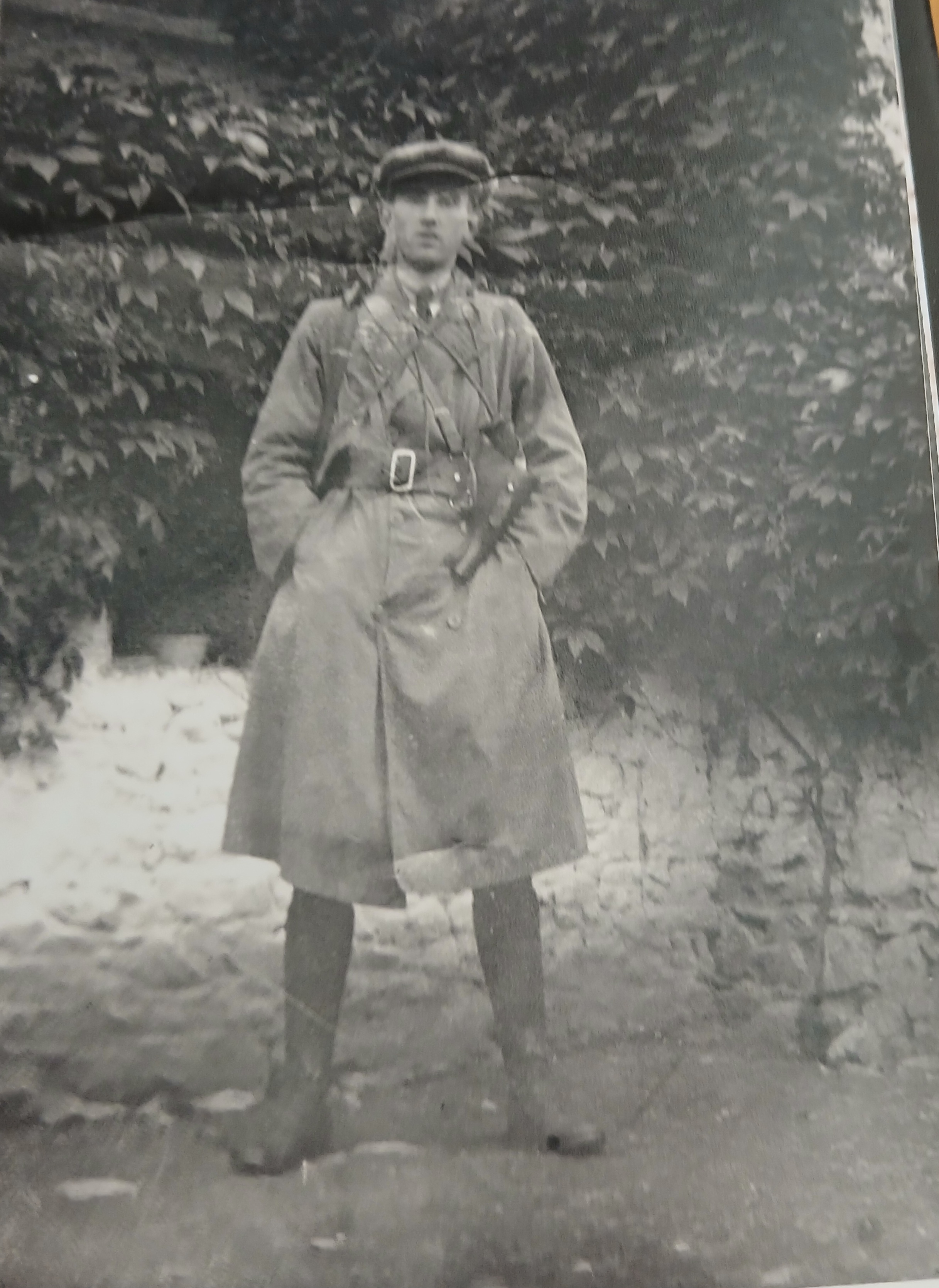
The stories of my paternal family have always been dominated by the legend of my grandfather who fought in the Irish Republican Army (IRA) on the Anti Treaty side during the Civil War. Jack Kelly, my Dad’s father, was born in 1898.  Jack, like so many young men across the Empire, lied about his age and signed up to fight for the British in the First World War. I have since read that about 210,000 Irish signed up to fight and often they were seduced by propaganda about their own martial status as coming from a proud warrior legacy, similar to rhetoric about Māori who signed up for the Battalions.[9] Similarly to Māori they believed that fighting for the British would once and for all give them full citizen rights in their own country. This did not happen for either the Māori or the Irish without a fight. It’s also argued that Catholics signed up to support other Catholics attacked in Belgium and France – so some argue it wasn’t about nationality but religion.  Portarlington, originally called Cooletoodra is on the border between County Offaly and County Laoise. It’s just over 70 kilometres west of Dublin. Jack’s parents, John and Mary, ran a successful bakery at Portarlington and apparently spoke fluent Gaelic, and had many children, not all of whom survived to adulthood. We have letters from childhood friends of my grandfather, reminiscing about the ‘good old apple pies’ Jack’s mother used to share out among the kids in the neighbourhood.[10]

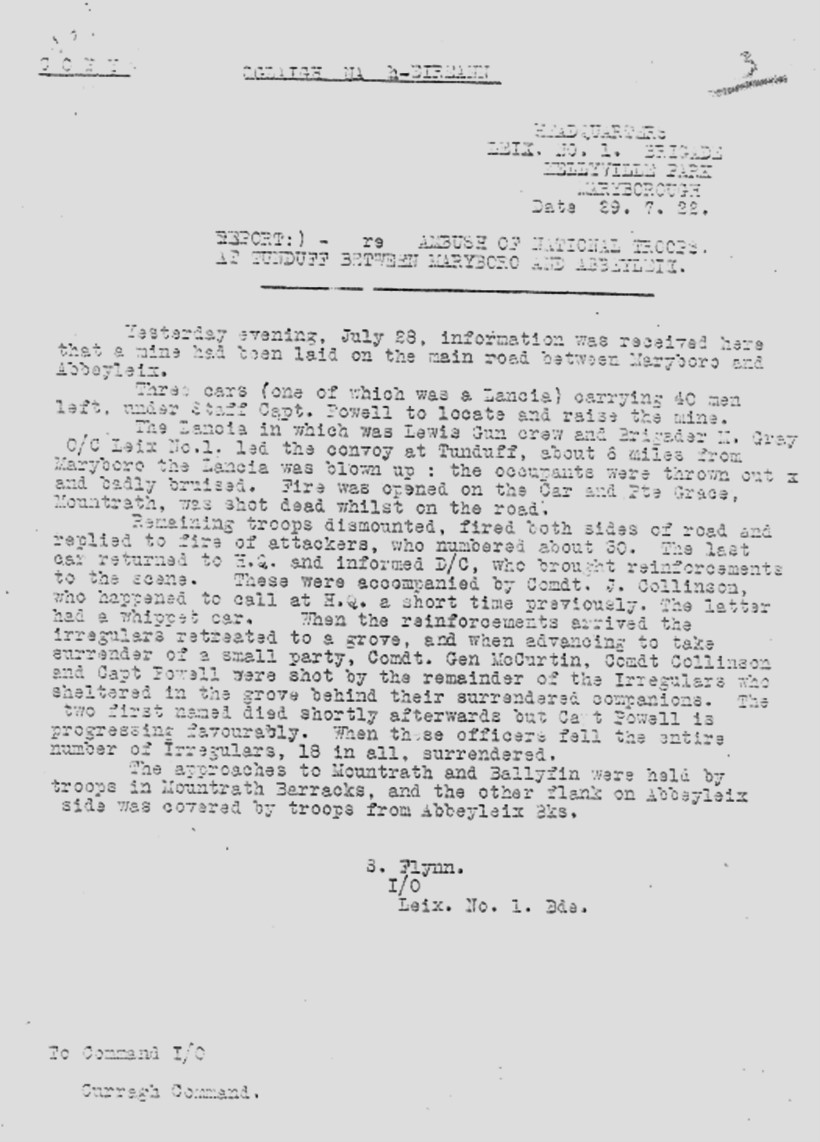
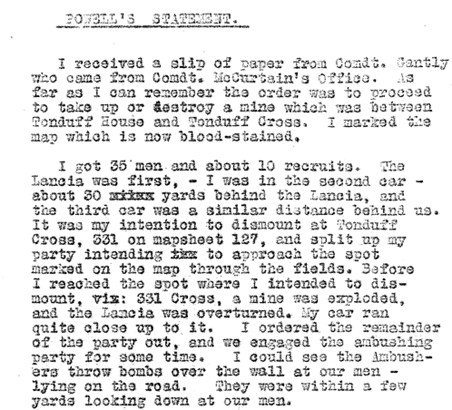
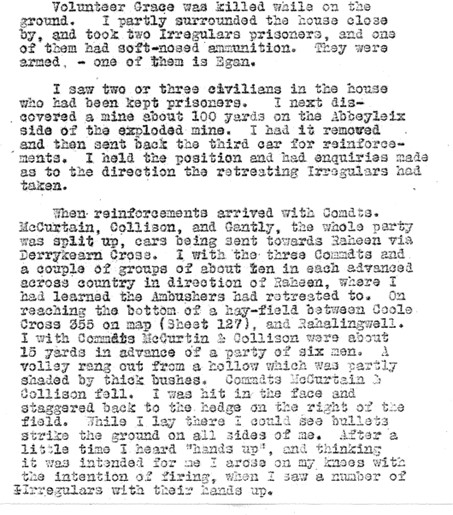
Through the family blog, we have been able to communicate directly with County Laoise historian Michael Rafter who has written a book about the Civil War activities in my Grandfather’s area, and in fact we’ve found Jack in Michael’s book. There was also a misnamed photograph of Grandad in his anti-treaty IRA outfit on an official website dedicated to the Tondoff Ambush Grandad was involved in. The photo was miscredited originally in Michael Rafter’s book.

Not only has the website now been amended to name Grandad (even though this is a reluctant admission on our part) we have also got a copy of Michael’s amazing book which is set for a reprint called The Quiet County: Towards a History of the Laois Brigade I.R.A. and Revolutionary Activity in the County 1913-1923, Michael J. Rafter, 2016. In fact the first person I contacted about the misnamed photograph is the curator of the website, who is descended from one of the men who was killed during the ambush my Grandad was involved in. He was very gracious given my family’s involvement in that death.

It’s been amazing to connect with Michael, who has been able to identify people in photos we had, as fellow members of Jack’s battalion of the IRA.

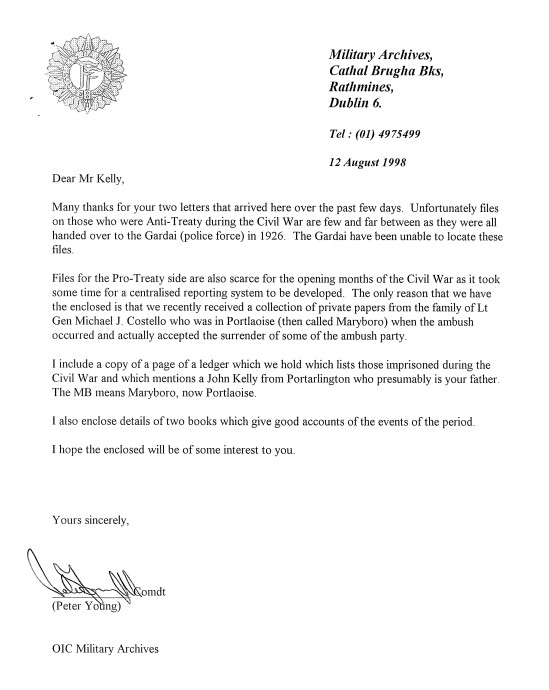
Jack Kelly was apparently a man of few words in Irish or English. He did not talk about the First World War or the Irish Civil War, or even very frequently about his family back home. My Dad says they did not discuss politics at home, although Jack did give his eldest son the middle name ‘Eamon’, for the Irish political leader, Éamon de Valera.[11] They also had a picture of Mickey Savage on the wall, which was common for working class families of the time. My uncle Mike, Jack’s youngest son, was told, probably like every Irish diaspora visitor before him, that when de Valera visited Portalington he had been offered safe refuge in the Kelly household when he was on the run. We cannot prove that this is true, but we have documentary evidence, and more now from Michael Rafter that Jack was an IRA man and ran his battalion from Portalington. This information originally came from a military historian based in Ireland, hired by my uncle Mike. Released from jail at the end of the Civil War, Jack moved to New Zealand in 1926, married a Scottish Protestant New Zealander, Jean Rodger Martin, and had four children. He worked for New Zealand Railways as an electrician for the rest of his life. This was all I knew about my paternal family.

The farm my Great Great Uncle William (so my Grandad Jack’s Uncle) and Bridget Kelly settled on was part of the Mangahao Survey District, Block VIII (or XVIII, depending on the file), and was called the Pahiatua Special Village Settlement. It was subject to a 999-year lease from her Majesty the Queen, dated 1 July 1886.[12] And so my Irish family, who knew all about occupation, the oppression of their culture and language, lived on Māori land, leased by the Crown and given to settlers to develop. I have no idea what they thought about this, or even if they thought about it at all. When my grandfather Jack sang ‘Galway Bay’, a popular song of protest against English occupation to his New Zealand-born children, did he do so with any sense of irony?[13] Dad just told me that ‘The Wearing of the Green’ was also sung a lot at home.

Graeme Vial and my father John began an email correspondence around 2017, and Graeme asked: ‘How were the Kelly and O’Grady families connected? Colin [Dron, Lizzie’s husband] used to mention the name, and the section over the road from the house is still known as Jim’s section, named after Jim O’Grady.’[14] At the time my father was unable to answer this question, having no knowledge of Jim’s migration to New Zealand. (So that travelling trunk for Brigid O’Grady, so far as we knew, was hers alone – we thought she was a single Irish woman in her twenties who came out to go into service, as so many did. We didn’t know about the children she’d brought with her, one of whom had her name). Our cousins the McGreevys whose mother Pat and siblings also visited the farm as children knew nothing else about Jim except that he lived his life at Porirua Hospital and was buried in the family grave, which my cousins Gerard and Stephanie have maintained.[15]

And they only thought to tell us this because I happened to have the travelling trunk with me when we visited and I mentioned the name ‘James’ written in the bottom. My cousin Gerard said ‘oh poor James’ and his knowledge of the story came out for the first time.

This was where my research skills came in. It took me a while, but I was able to apply to the CCDHB – Capital Coast DHB to get permission to access James’ files held at Archives NZ. They are the most fulsome account we have of James. And if you’re interested in applying for one of these files, I’ve written a short piece on the family blog about the process, I can show you at the end. It’s a little longwinded, the process, not the piece.

If you haven’t been to the Porirua Hospital Museum, I highly recommend it. It’s creepy and terrible, and also very educational. It is an original ward from the hospital. Keep in mind though, that there are still mental health wards at what is now called Keneperu. It’s still a place of challenge and tension and suffering for many. And the unmarked graves are just over the hill at the cemetery on the same site.

In continuing to look at block files at Archives NZ I was able to work out that actually it was not my Great Great Uncle William Kelly who purchased the lease on the farm at Pahiatua – it was his mother-in-law, Brigid O’Grady, widow of a shoemaker, who with her 2 children in 1884 had come to New Zealand with that travelling trunk, and after a few years was able to purchase the first of two family leaseholds in the Pahiatua Special Settlement Village. James, who four years later was incarcerated in the asylum, managed to purchase the leasehold for the second section over the road in 1899, having previously had 100 acres at Mt Cerberus, which was an area along the road towards Hawkes Bay north east of Pahiatua (I went down a rabbit hole at Archives with this one, as today Mt Cerberus is in the south of the South Island). The records which can seem dry at times were another revelation to me when I realised James had been considered capable of running a farm prior to being put in the asylum and I could see his signature and handwriting on various legal documents for the first time. Once he’s in the asylum, he has no written records of his own. Furthermore, the Archives NZ files revealed that three generations of Irish Women in my family owned and ran that farm – Brigid passed both leases (because 13 years after he was put in the asylum, his mother was able to take over James’ lease) to Bridget her daughter who married my Great Great Uncle William, and Bridget left the farm in such a way that Lizzie, William’s niece, was eventually able to purchase it (though that’s a whole story). We had assumed the men in the family had owned the leases. Why? We just did.

We still have some questions about James and some of our other family stories – we haven’t yet worked out when William arrived in NZ because ‘William Kelly’ is such a common name and he doesn’t seem to have had a middle name to distinguish him. The Scottish side are much easier to identify because the women generally were given a middle name which was their mother’s maiden name. I wish the Irish had done the same! We’ve never found a photo of James, but I hope to one day. I hope to do some more research about the O’Gradys – one of my Grandmother Jean’s letters mentions that Aunty Bridget O’Grady told her she came from the same area as Jean’s friend the English family (somewhere in Tipperary, that’s all we know at this point).

This group, Irish Special Interest family historians, has helped me find new tools I had no idea about to research my family history, and talking and listening to you all has helped me bring it to life – the good and the bad of it. Like many people, there has been tension at times in sharing these stories with family who may not want to know some of the detail about madness, or the neglect of unwell family members, or who grew up with a different version of a story to that which I’ve found. Nevertheless, it has been a great process for my family to talk through the past and what it means to us, and to talk about colonisation and our role in it, particularly as my father is now 88, and finally in the mood to reflect on his life and the life of our family a little more.

We’re lucky to have a family grave to visit, and that James is resting there, even if it says he died in 1949 when his hospital file says it was 1942.

And family photos to share – my Dad is a keen photographer and is particularly fond of this one he took of his Aunty Lizzie in old age, though she may not have liked it so much!

What I have learned, is that even if you think you don’t have information in your family, you do, it just may take a while to work out what it means, to uncover its value, to see the child’s scrawl on the bottom of the trunk, or understand the keepsakes in the family bible. And the only way to do that is to ask, and research, and share and listen. Thank you.

Appendix Royal Commission further information on unmarked graves

95. The Inquiry received some information on unmarked graves at Tokanui Psychiatric Hospital located south of Te Awamutu, Sunnyside Hospital in Ōtautahi Christchurch, Cherry Farm in Ōtepoti Dunedin, Seacliff in Ōtepoti Dunedin, and Porirua Hospital. Evidence was provided by Mr Wright and his team, who have identified 765 Sunnyside patients buried at Sydenham Cemetery between the years of 1896 to 1934 (the most recent year transcribed to date).[131] Mr Wright predicts there could be upwards of 1,000 Sunnyside patients at Sydenham Cemetery, with the majority of these being unmarked.[132]

96. At Tokanui Hospital Cemetery, work undertaken by Anna Purgar has verified 469 people as being buried in unmarked graves. Several bodies have since been exhumed and reburied in other cemeteries.[133]

98. The Westland District Council had not done any research into unmarked graves at Hokitika Cemetery and stated that it does not hold sufficient records to conduct a search. Despite this, the Council was able to provide this Inquiry with the names and plot numbers of 83 individuals buried in Hokitika Cemetery, with the last known address recorded as ‘Seaview Hospital’ and without a headstone recorded on the Council’s records. However, the Council notes that the records “may not accurately reflect what is actually on the ground,” meaning they do not know for sure which graves are unmarked.[135]

99. In 2014, a local historian identified 172 unmarked graves at Waitati Cemetery, Otago. About 85 percent of these graves are from former institutions such as Cherry Farm and Seacliff. The historian noted that the last burial was in 1983, with many in the 1930s and 1940s.[136]

Note 134 – Porirua City Council, Letter, Response to Royal Commission of Inquiry into Abuse in Care Notice to Produce 487 (29 July 2022). Note: Porirua City Council calculated the “number of unmarked deceased, which will be slightly different to the number of unmarked graves as many graves will have multiple deceased buried in them, this was a more accurate way for us to report”.[16]


[1] Christopher J. Van Der Krogt, Irish Catholicism, Criminality and Mental Illness in New Zealand from the 1870s to the 1930s New Zealand Journal of History, 50, 2, Massey University, (2016).

[2] Massey University Press, Auckland, 2024

[3] Alexander McKinnon, Come Back to Mona Vale: Life and Death in a Christchurch Mansion, Otago University Press, Dunedin, 2021, p. 281.

[4] Oliver Sutherland, Paikea, the story of I Sutherland, (details)

[5] That Leckie’s history of mental depression was published in the same year as the final report of the years-long Royal Commission feels appropriate. It helps us contextualise the long history of isolation which has at times characterised institutional care in this country. But it also offers ‘glimpses of the lives of those admitted to’ those institutions, as well as the attitudes of those who administered and managed them, as Barbara Brookes has argued in relation to paperwork from the files of Seacliff Asylum. 

[6] Beautiful Children, Te Uiui o te Manga Tamariki me te Rangatahi ki Lake Alice | Inquiry into the Lake Alice Child and Adolescent Unit, December 2022, New Zealand Government.

[7] Canterbury University Press, 2013.

[8] For an excellent examination of ‘Shame and its Histories in the Twentieth Century’ refer to Barbara Brookes’ article of that name in Journal of NZ Studies, Antipodes New Directions in History and Culture Aotearoa New Zealand, No.9 (2010).

[9] Heather Jones and Edward Madigan, Chapter 5 The Isle of Saints and Soldiers: The Evolving Image of the Irish Combatant, 1914-1918 in Koninklijke Brill NV, Leiden, 2019, DOI:10.1163/9789004393547_007

[10] Letter of Tommy Cribbins to Lizzie Kelly (date?) John Kelly’s archive, Auckland.

[11] John Kelly recalls that within the family it was said Jack wanted ‘Éamon’ as John’s first name, but his wife Jean was concerned other children would tease him at school by calling him ‘Amen’. John Kelly to author, 20 July 2018.

[12] Certificate of Title Under Land Transfer Act, Leasehold No 6a/261, Lessor Her Majesty the Queen under Part III of The Land Act 1892, No. 534.

[13] For the breezes blowing o’er the seas from Ireland,

Are perfumed by the heather as they blow,

And the women in the uplands digging praties,

Speak a language that the strangers do not know.

Yet the strangers came and tried to teach us their ways,

And they scorned us just for being what we are,

But they might as well go chasin’ after moon beams,

Or light a penny candle from a star.

And if there’s gonna be a life hereafter,

And faith somehow I’m sure there’s gonna be,

I will ask my God to let me make my Heaven,

In that dear land across the Irish sea.

[14] Graeme Vial to John Kelly, 20 November 2016.

[15] Discussion with tour guide at Porirua Hospital Museum, 12 June 2018.

[16] Ngā rua kōiwi ingoa kore: Unmarked graves section, Royal Commission Abuse in Care Inquiry https://www.abuseincare.org.nz/reports/whanaketia/part-5/chapter-2#_ftn133

Jean’s Letters 1934 – 1937

By Emma-Jean Kelly.

Jean Rodger Kelly née Martin was my paternal grandmother. So far as I can tell from letters she wrote to her husband Jack Kelly, she was an optimistic, funny and brave woman. She faced her middle-class Scottish Protestant family’s approbation for falling in love with a working class Irish Catholic immigrant in 1930s Christchurch. That takes some courage!

There are now four generations of Kelly women who proudly carry Jean’s name.

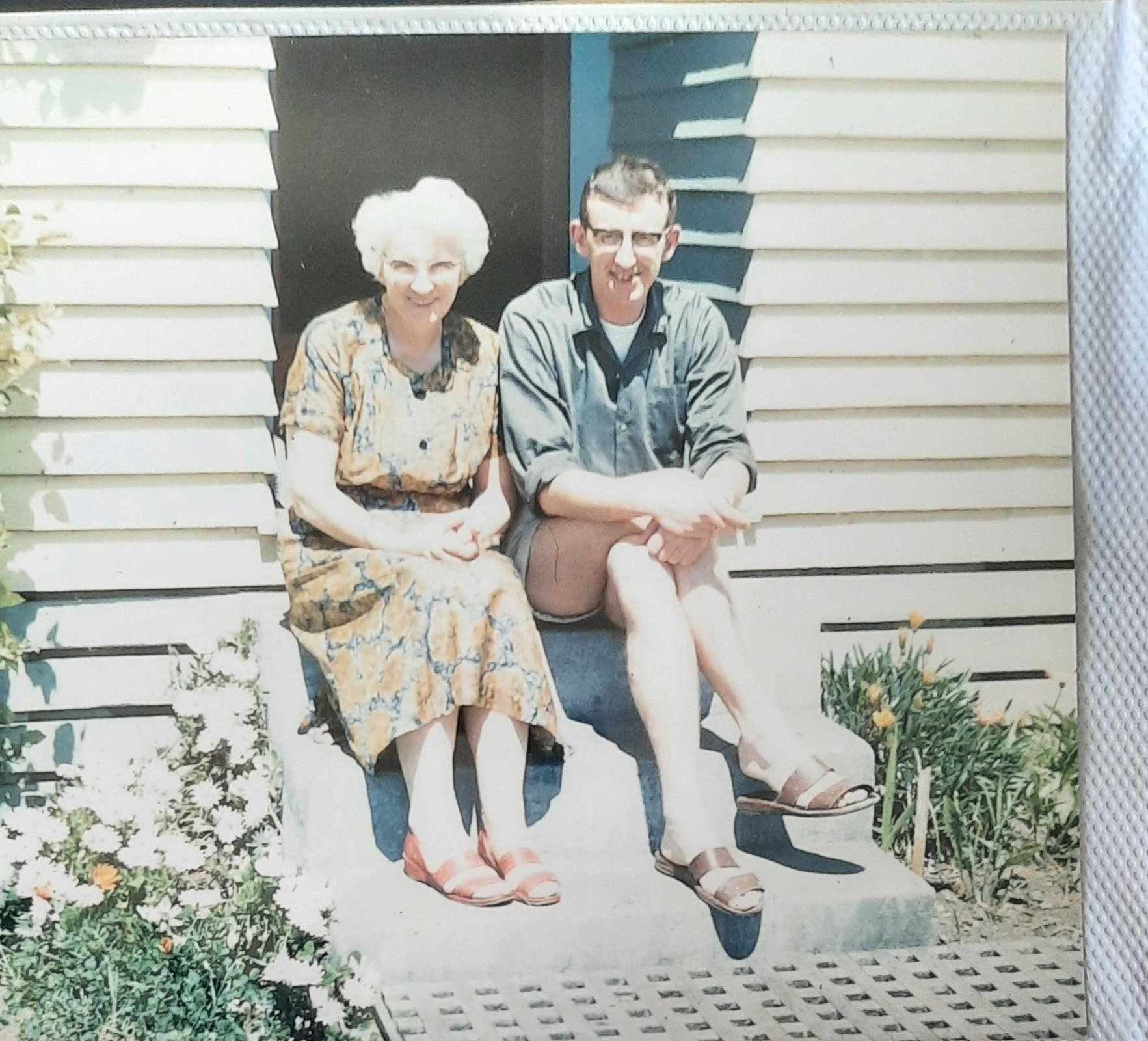
Figure One: Jean and John Kelly sitting in the sunshine (1960s?). Thanks to Dad (John) for keeping Jean’s letters, and to Uncle Mike for insisting we ignore Grandad Jack’s instructions to burn them.

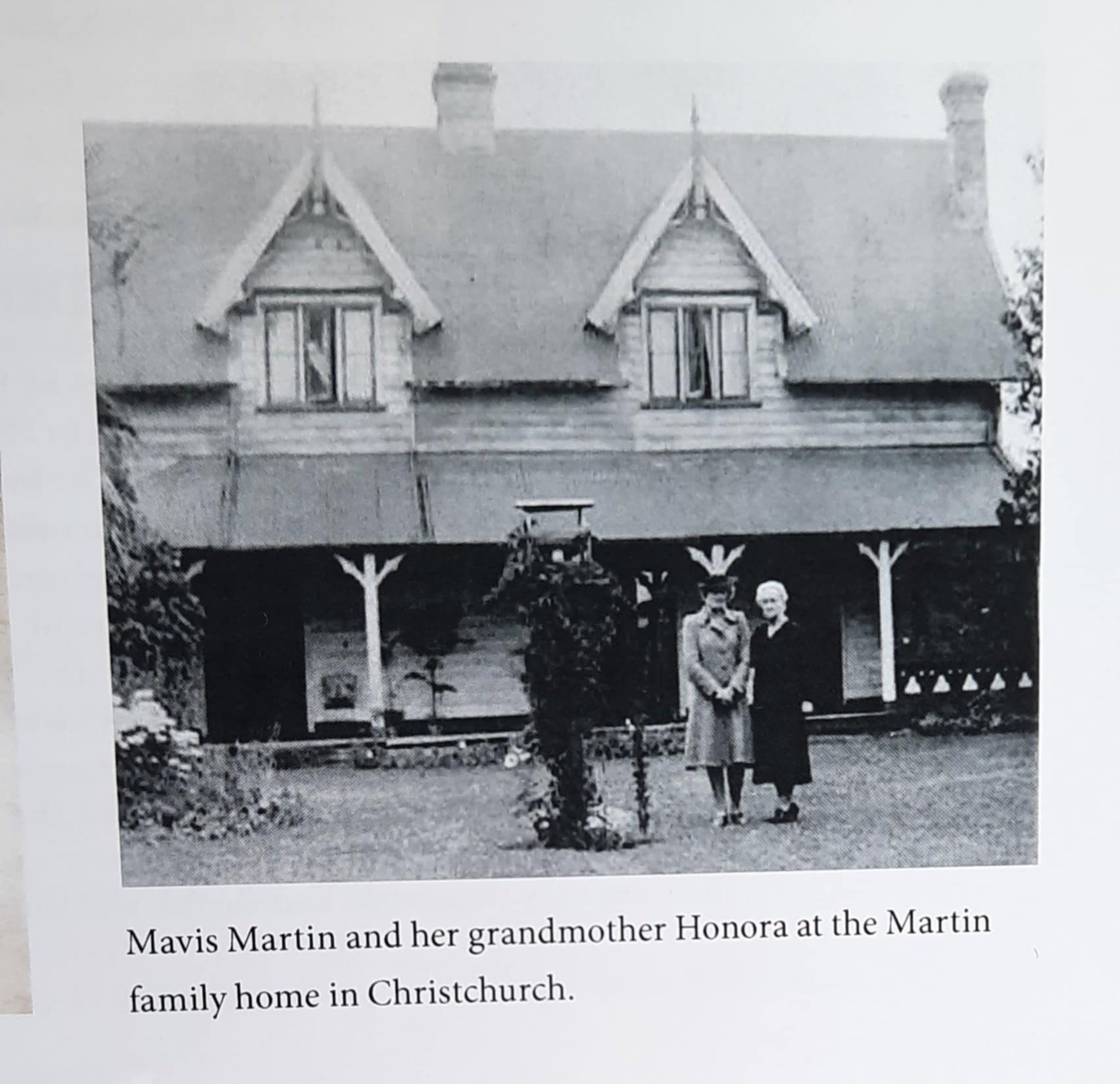
Jean grew up in relative affluence at 64 Fairfield Ave, Spreydon, a house which unfortunately no longer exists.

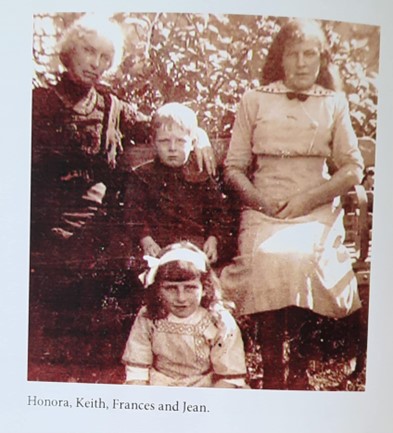
Figure Two: 64 Fairfield Ave, Spreydon, Christchurch; Jean’s sister Mavis with their grandmother Honora.

Jean had three siblings, Keith, Douglas and Mavis, and they were all involved in Scottish dancing and related activities. We have a lovely photo of them dressed up for a photo in Scottish gear on my Dad’s wall.

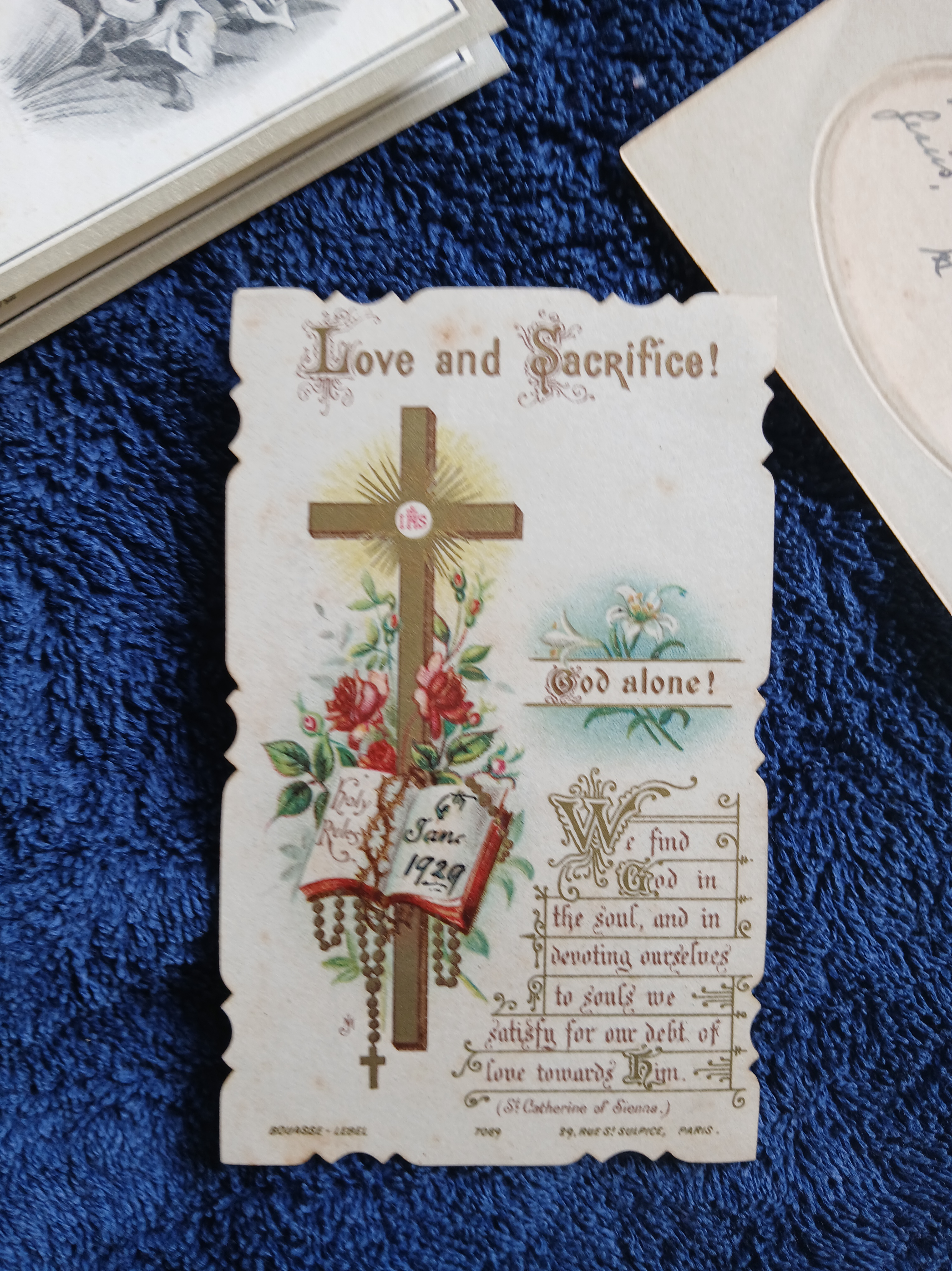
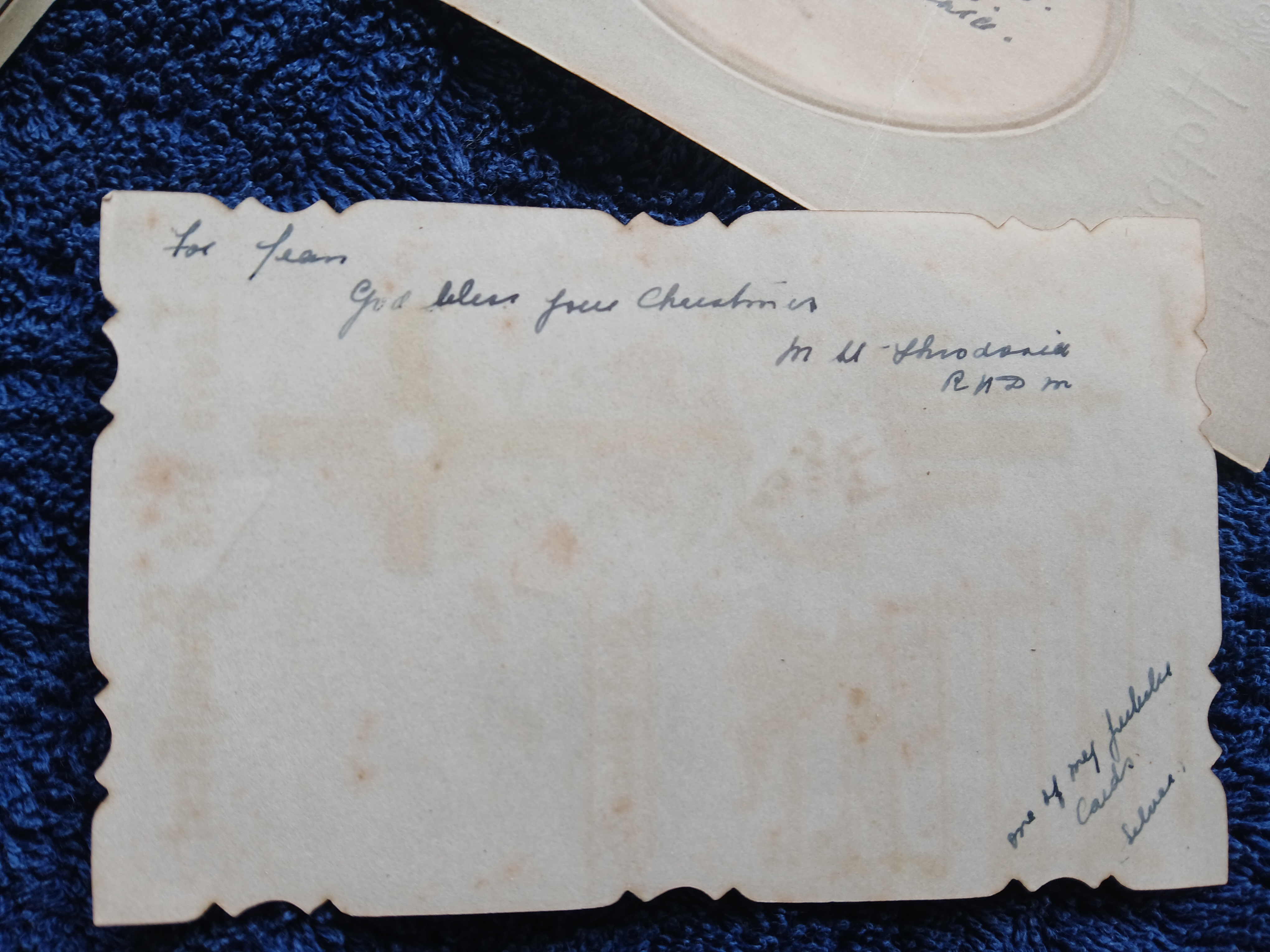
Figures Three and Four: Card from Sister Theodosia to Jean, dated 1929 on the front of the card.

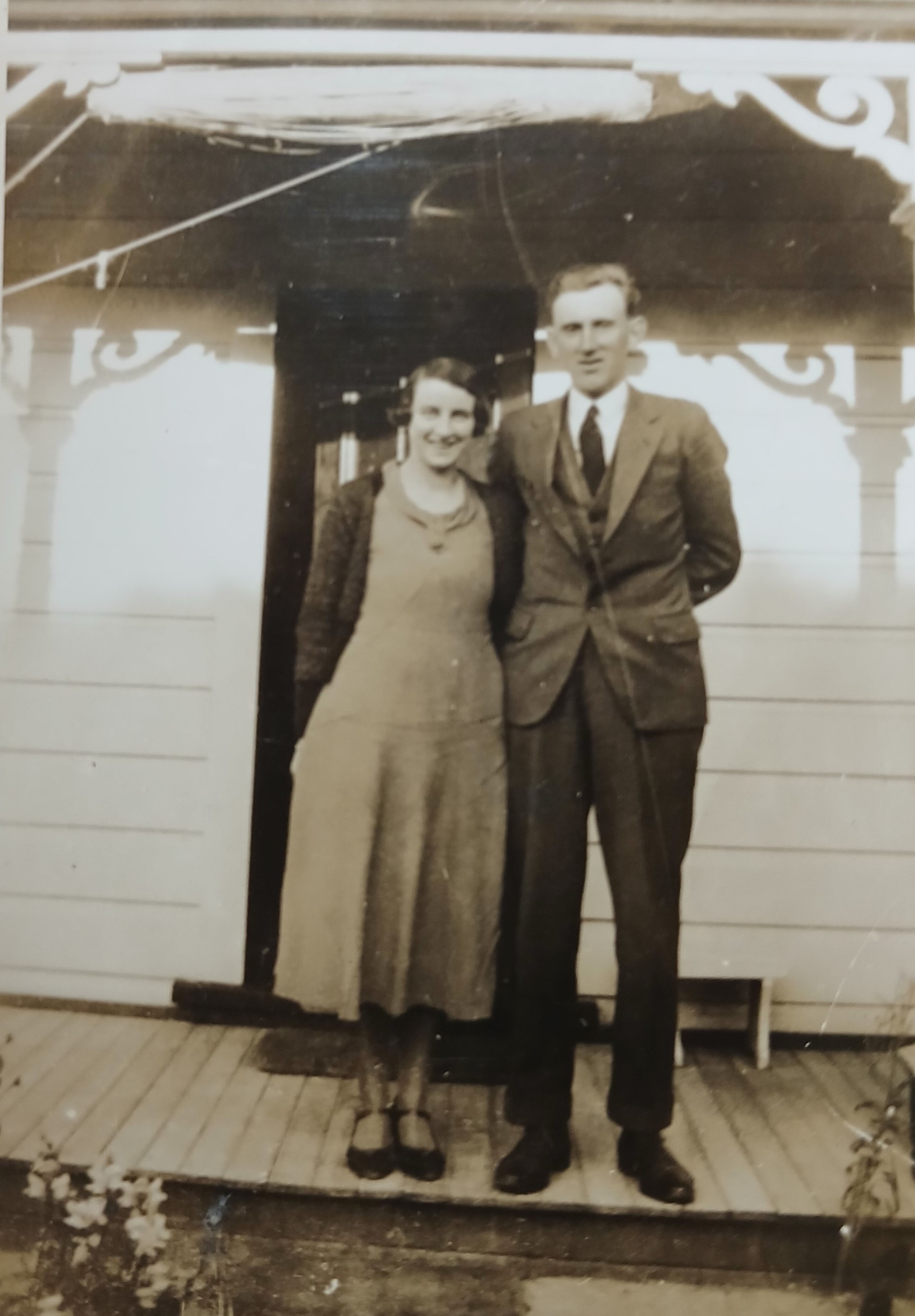
We’re not sure what year Jean met Jack, but this card dated 1929 is from Sister Theodosia, a Catholic Nun, and is addressed to Jean. There’s one for Jack too, but it’s undated. Could Jack and Jean have met as early as 1929? If so they had some self control, because they didn’t marry until 1934 at the Catholic Cathedral in Christchurch, and as Jean said ‘had Maureen 9 months to the day later’.

 She recalls in a letter to Jack on Anzac Day 1934 seeing him the year before –

Has been raining all morning but it is clearing now, just in time for the procession. I am not going up. I have been thinking all day of Anzac Day last year. You remember I put a note for you under Jinnie’s door, and we went to Nola’s at night.

We are lucky enough to have letters from Jean to Jack, written from the time of their engagement in 1934 to 1937. This covers a time with lots of change. They were moving from one flat to another, Jack was working in other towns on the railways, and then they made the big move to Wellington. Jean also travelled to spend time with Jack’s brother Mick and his wife Frances in Petone, and to Jack’s sister Lizzie on the Pahiatua Farm. Jean seems to have been embraced by the Kelly family, at a time when her own family were unhappy with her.

Figure Five: Jean and Jack Kelly, probably Pahiatua, 1930s

Jean’s letters are full of delightful detail – the cost of things, their first-born baby Maureen’s behaviour. Jean and Maureen regularly visited her brother Doug Martin and his wife Nada in Miramar, Wellington which is nice to know, given the estrangement from the rest of the family in Christchurch.

In April 1934, Jean wrote to Jack from Petone, where she had been staying with Jack’s brother Mick and his wife Frances. They must have been newly engaged at this point –

I am glad you are at the Hotel. I hated the thought of you in a hut. Hope you enjoyed the euchre. Did you wear a placard saying that you are engaged?

Your pullover is growing steadily. Do you remember the photo we saw of the altar in the Catholic Church at Mt. Cook looking through the window at the mountains, well Bill Churchill bought in an enlargement of the original photo. Wish you could have seen it.

I gave Frances and the family your message and kisses, at least Pat and Joan have to collect theirs yet. Frances sends love from them all. Pat was quite worried to find that you went without your ring after he waving (?). It hasn’t been off my hand since Sunday night. Mick said he has a photo [of] you in uniform and he is going to look it out and give it to me. I am also bringing back your photo of Agnes and her husband. Among my collection is a photo of Bill as a baby, and the passenger list of the Athenic. Darling I miss you terribly, although no one knows.

Pat, Bill and Joan are Mick and Frances’ children. It’s neat to see that mention of the passenger list of the Athenic, which was the boat Jack came to New Zealand on in 1926. We still have that in a biscuit tin of family documents at Dad’s place.

Jean then returned to her family home in Fairfield Ave, Christchurch and she described some unpleasant comments about the Irish made by a friend there.

But Jean wasn’t always focussed on family matters. It turns out she was a bit of a critic of films too. In an undated letter which is probably from 1935, she described going to see David Copperfield at the cinema –

Lizzie and I went to see “David Copperfield” last night, and it was disappointing. Some of the characters were good, Mr and Mrs McCorba [sic Micawber] and Uriah Heep particularly, but what were supposed to be Old English scenes were quite obviously faked, and the whole thing was quite unconvincing, and so depressing made me want to howl.

Although she doesn’t mention it except once in a letter where she says she is to be the ‘entertainment’ for the evening, Jean was an accomplished singer and pianist too.

Jean and Jack set up home in Christchurch for a while with firstborn Maureen, first at Ensor’s Road in a flat which turned out to be damp, and then they moved to Grafton St. Because Jack was away working, Jean had to organise everything herself, from the moving of boxes to the floor varnishing, but seems to have found it exciting and satisfying, despite being anxious about money.

I had an exciting day today at the house. Went there about ten and varnished the front room and hall. They look lovely now. I got some linoleum yesterday for the breakfast room and it came this morning. I stained the floor round it, and will varnish it later on. The sun comes in the back door about eleven, and the other afternoon I was there at five in the afternoon, and the sun was streaming in the door right through to the breakfast room. I am longing to plant some flowers and am going to get some next week. Almost forgot about Maureen today, bless her.

She loves Grafton St., and so will you, if only you can come soon and take up residence. It all looks so stunning and homelike in the daytime, no one else walking about. You will notice a wonderful difference after the flat. And the house is so totally different too. I am looking forward to showing you it all. It is lovely having to get it all ready. Am doing just a little each day. It is more pleasant doing it like this than if we were living there. There are a lot of gladiolas there already up and all sorts of things.

Enough about the house.

We are going to the other English’s tomorrow night. I sent away the wedding photos today to the three Kelly families, got some thick cardboard for them so they will arrive whole.

The sending of wedding photos to the Kellys is lovely to hear about – perhaps that was Mick and Francis Kelly, and the Kellys at Pahiatua, but it could also have been the Irish family who were still back home at Portarlington and the Pyke of Rushall, and maybe the Dublin-based siblings of Jack as well. Jean never met the Irish-based family, presumably as it was very expensive to travel, but there were letters, newspaper clippings and photos shared throughout their lives.

In 1937 Jean lost some money – it doesn’t sound like much by today’s standards, but £1 in 1937 clearly bought a lot more than $1 today.[1]

Envelope postmarked 7 April 1937, stamped ‘X Safety “Take Care” Avoid Risks’ addressed to Mr J. Kelly, c/o Station Master Pukekohe

1 The Mill Road, Petone, Tuesday

Jack Dear,

I don’t know whatever you will think of me.  I feel simply sick with worrying, kept waking up all night and feeling my heart go plonk down, and then I would remember what had happened. I was so looking forward to you coming home and now everything is spoilt. I suppose you will say I have been losing money all the time.

When I went in the shop Maureen cried and jumped down off the pram and I had to sit her on the counter and hold her with one hand and I suppose I didn’t put them in properly or something. They were rolled together. I don’t know what to do, I feel so miserable. I will draw £1 out when I need it. Wish to goodness I had put more of it in when I put the £4. I think I had better talk about something else.

No matter what else was going on in her life, Pahiatua seemed to have been a warm and safe place of fun and refuge for Jean from the time she got together with Jack. Being a railway family reliant on Jack’s job for location and housing, they were always moving around, but Pahiatua and the warm welcome from Jack’s sister Lizzie and Aunt (Bridget Kelly née O’Grady) was constant. Jean describes a typical day at the farm –

Maureen tries to say “Lizzie” and gets pretty near it. Lizzie takes her all over the place and plays with her instead of doing her work…When Maureen goes into the sitting room, Lizzie says ‘Come back here’ and Maureen shrieks with laughter and goes for her life, and Lizzie’s after her.

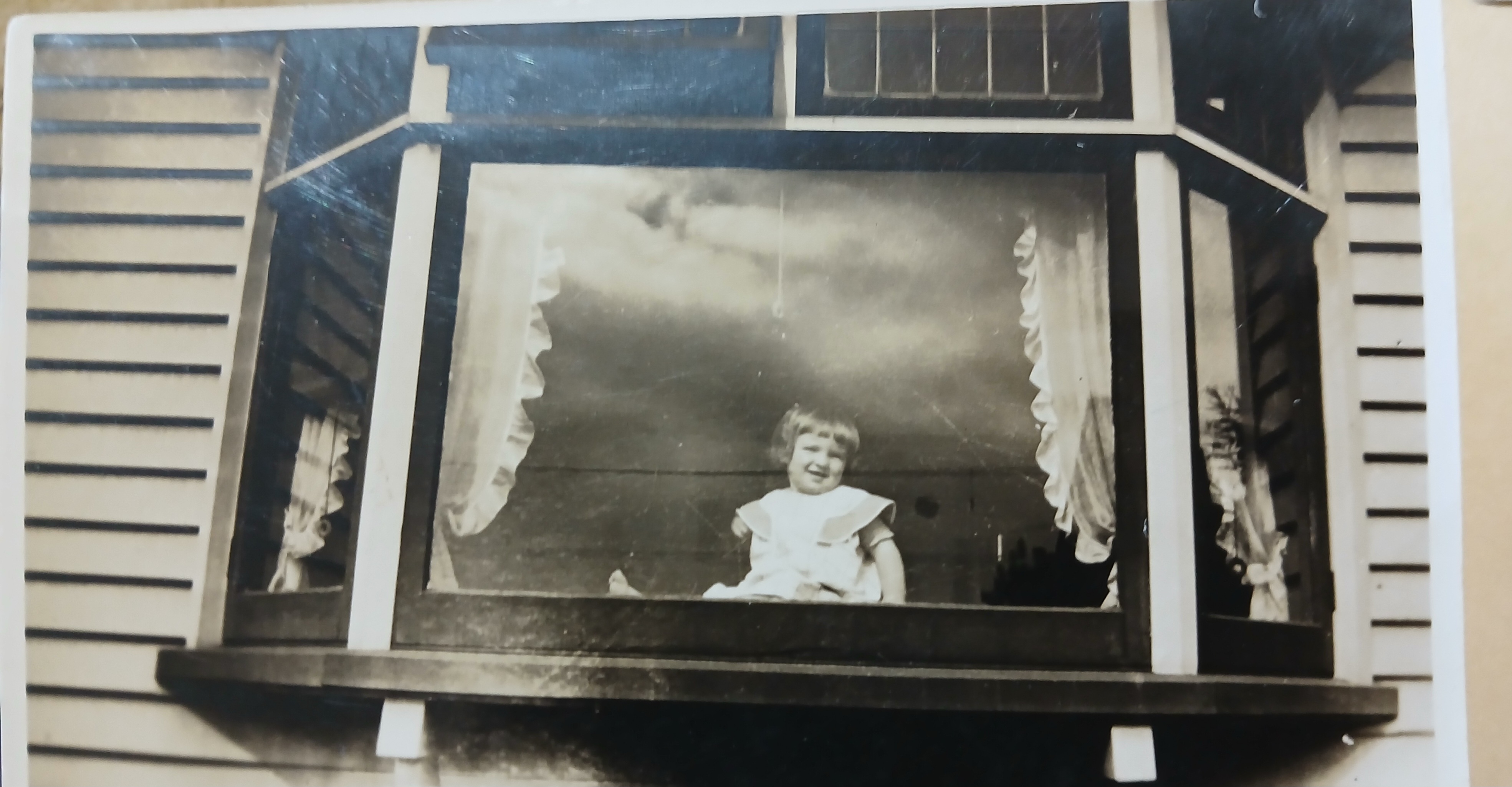
Figure Six: Maureen smiling in a bay window

Again from Mill Rd, Petone, in 1937, Jean wrote to ask if Jack knows where he might be working in the future, and also tells him the latest about their second-born child John and some odd advice she has received from the doctor regarding his teeth.

Ada told me today that Walsh told Mick they want to keep you in Auckland [note Jack’s Railway Workers Union card is with this letter, and the Hon. Secretary was G.W. Walsh in 1936]. Mrs Frost thinks it might be an April fool trick, but I wondered whether you had heard anything. Jack [English?] is holding his wristwatch and John is playing with it. John weighed 16lb today, pretty good. He said it was good to give him Glucose as it helps the teeth. I started him on Groats instead of Weet-bix and the chemist said that is quite good. Maureen’s teeth are not through but they don’t seem to worry her.

Jean always missed Jack when he was away, but kept her sense of humour and made friends despite (or perhaps because of) her loneliness.

She described spending time with a neighbour when they lived in Mill Road at Petone in 1937 –

This morning about 8.45 Mrs Frost asked me if I would go to the Hutt so we left at ten and got back at twelve. It is a beautiful day and I thoroughly enjoyed it. There is a most lovely park there and we took Maureen on the swings, on a sort of merry go round thing, and on the slide. She didn’t like the swing at first, kept saying ‘I don’t like it’, but after a while she was alright. She loved the slide. Mrs Frost took her up as high as she could reach and Maureen lay back and slid down and I caught her. She thought it was lovely. When you come home we can go over again and there is a park here too. Bill Frost is going to Palmerston tomorrow for a fortnight. They have just bought a beautiful short wave radio. She told him that she and I are going to make whoopee while you are both away.

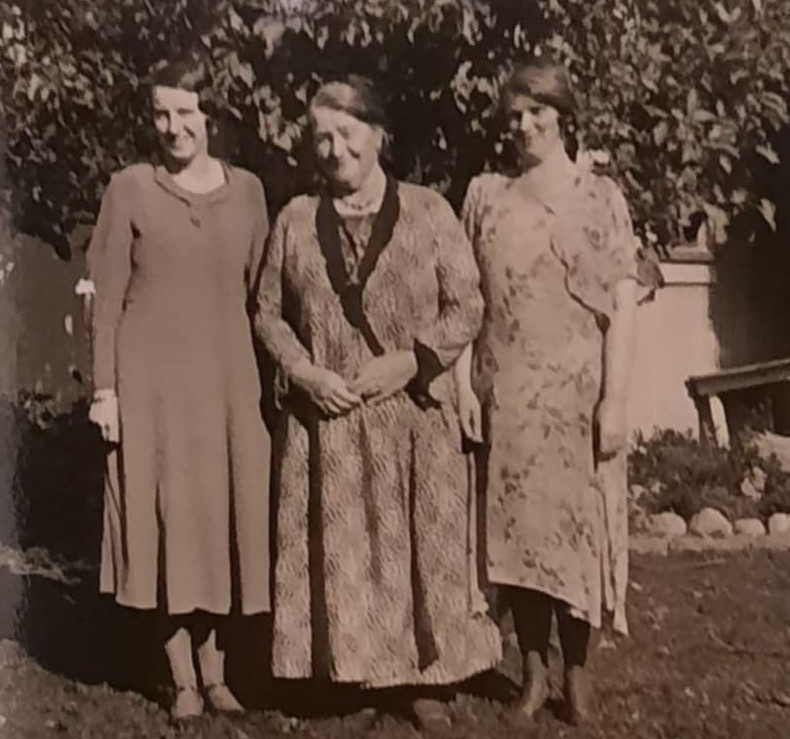
Figure Seven: Jean Kelly, Aunty Bridget Kelly and Jean’s sister-in-law Lizzie Kelly, Pahiatua

I feel really lucky that we have these letters, even if they are from a short window of time (1934 – 1937). They show us a little of what the early days of Jean and Jack’s marriage were like. She clearly loved him, and was quite open about her feelings. In one of the last letters, Jean described an aborted attempt to go to the cinema, interrupted at half time due to Maureen and John crying with their babysitter (who was probably Lizzie at Pahiatua). Despite this interruption, she says –

I thoroughly enjoyed the little holiday and it was just long enough. Best not to wear out one’s welcome, I think. They liked having us too, especially Lizzie she does love the kiddies and said she will miss them.

I will have to pay my electric light bill this week. Should be able to save some this time.

I bought back [from the Pahiatua farm] apples, carrots, tomatoes, 2 tins cake, soap, 2lb butter, ½ dozen eggs and a flask of milk. They are really wonderful.

Am longing to see your ugly face again,

Best love, Maureen, John and Jean.

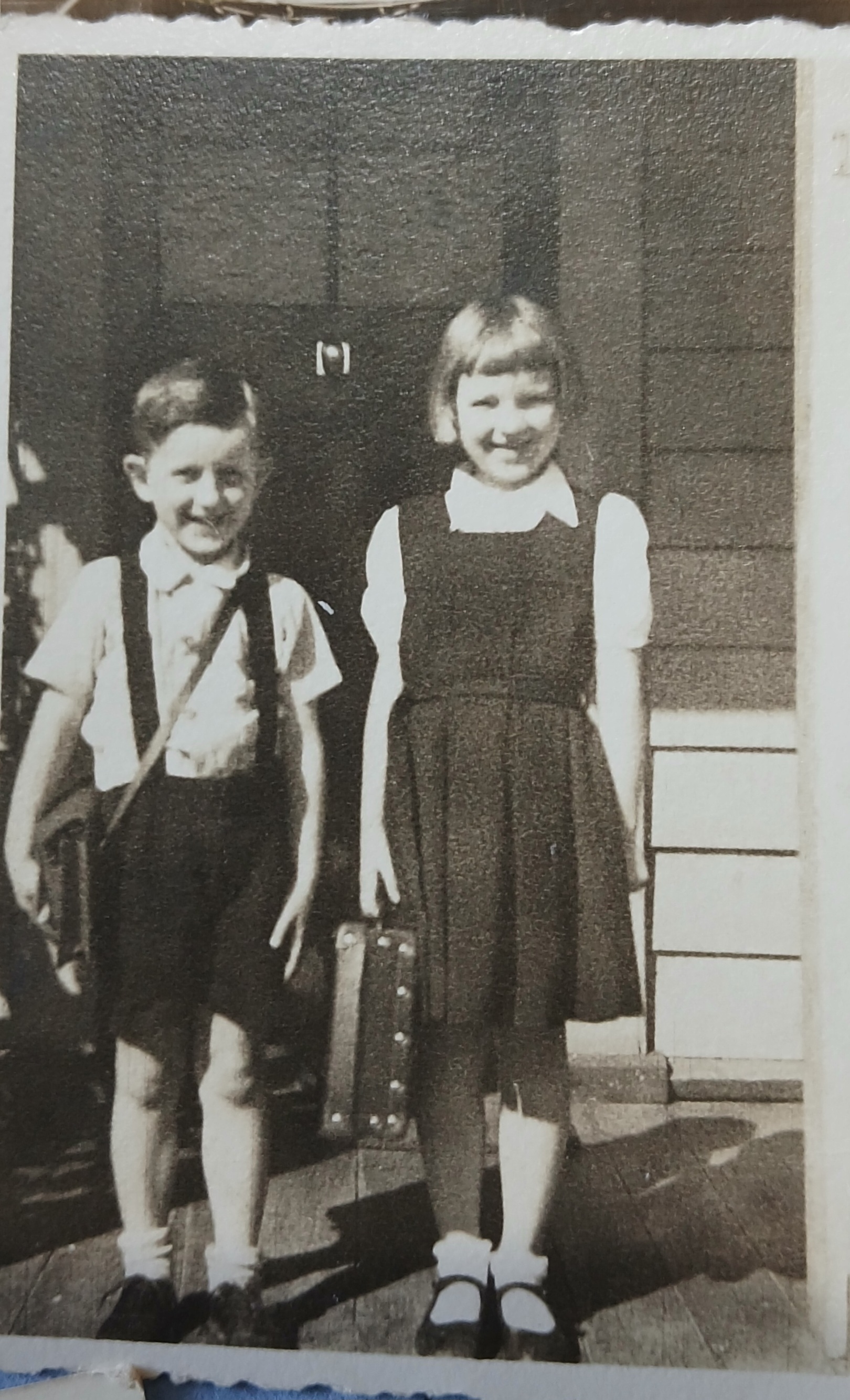
Figure Eight: John Eamon and Maureen Alice Kelly, probably John’s first day of school. John’s middle name was to remember Eamon de Valera, leader of the Irish Republic when it eventually came to be, and Alice was for a sibling of Jack’s who died aged 17 in 1909.

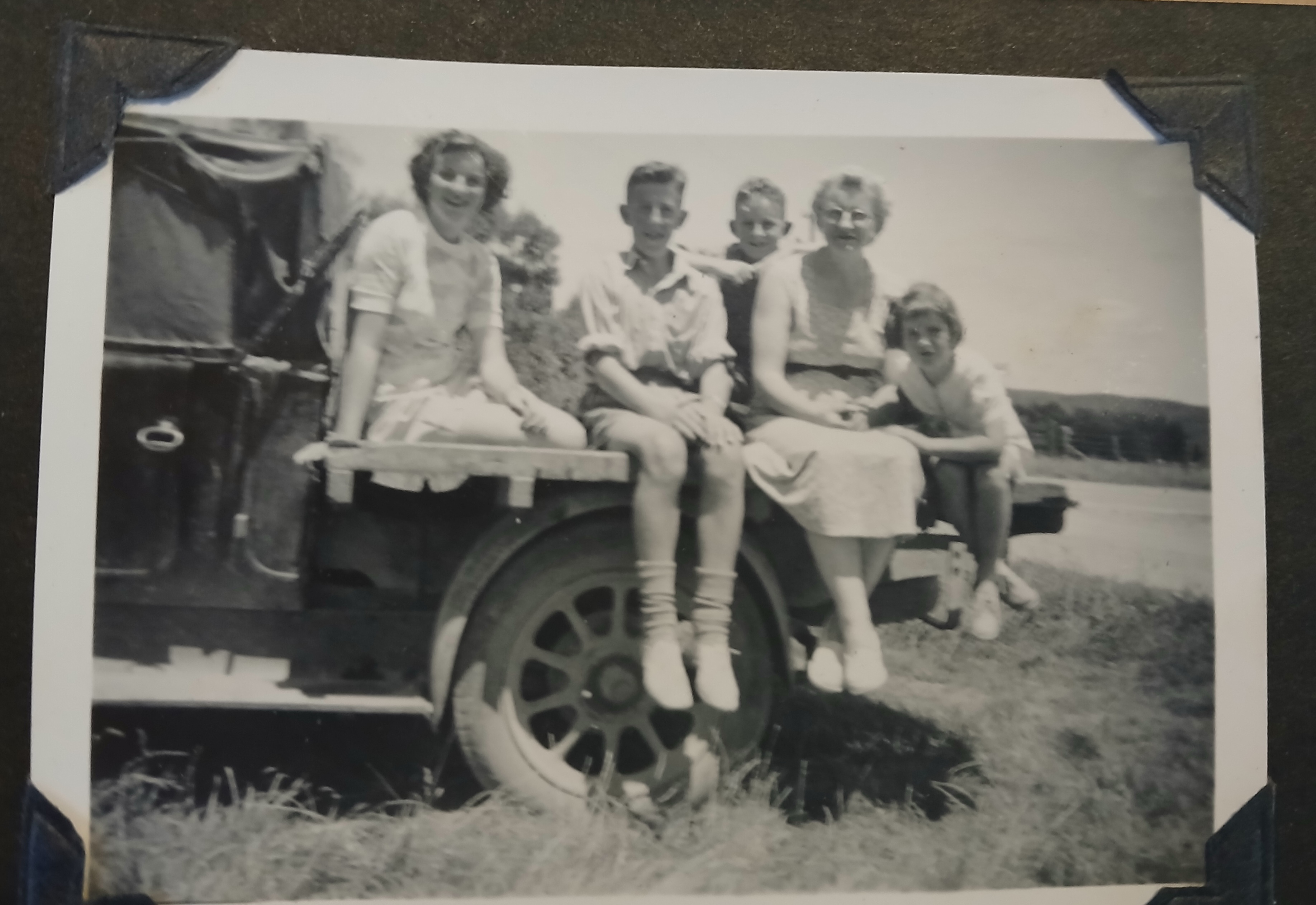
Figure Nine: Maureen, John, Michael, Jean and Carole on the back of Colin’s cut down truck, Pahiatua

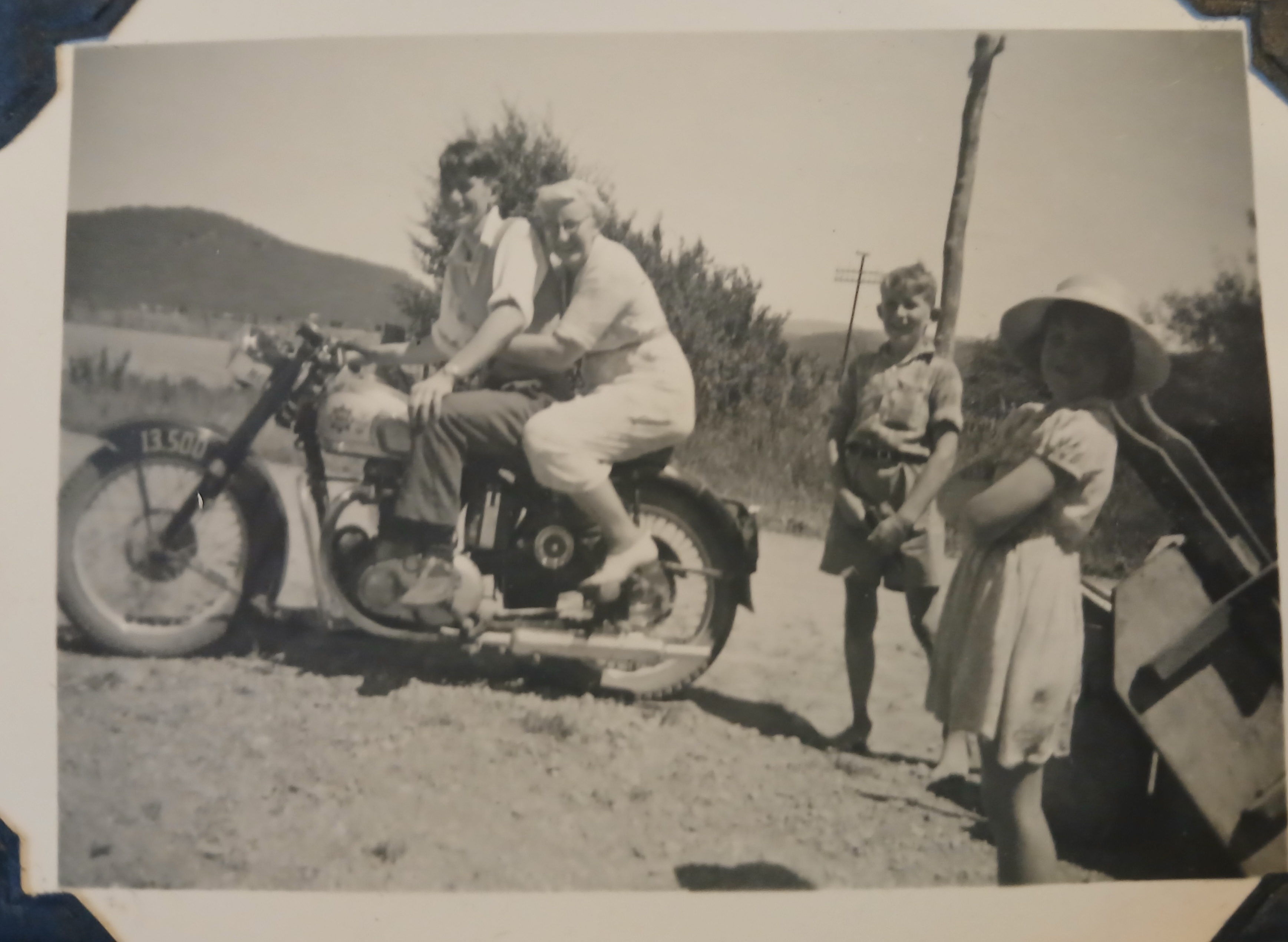
Figure Ten: Jean on the back of daughter Maureen’s boyfriend’s motorbike, Pahiatua with Michael and Carole

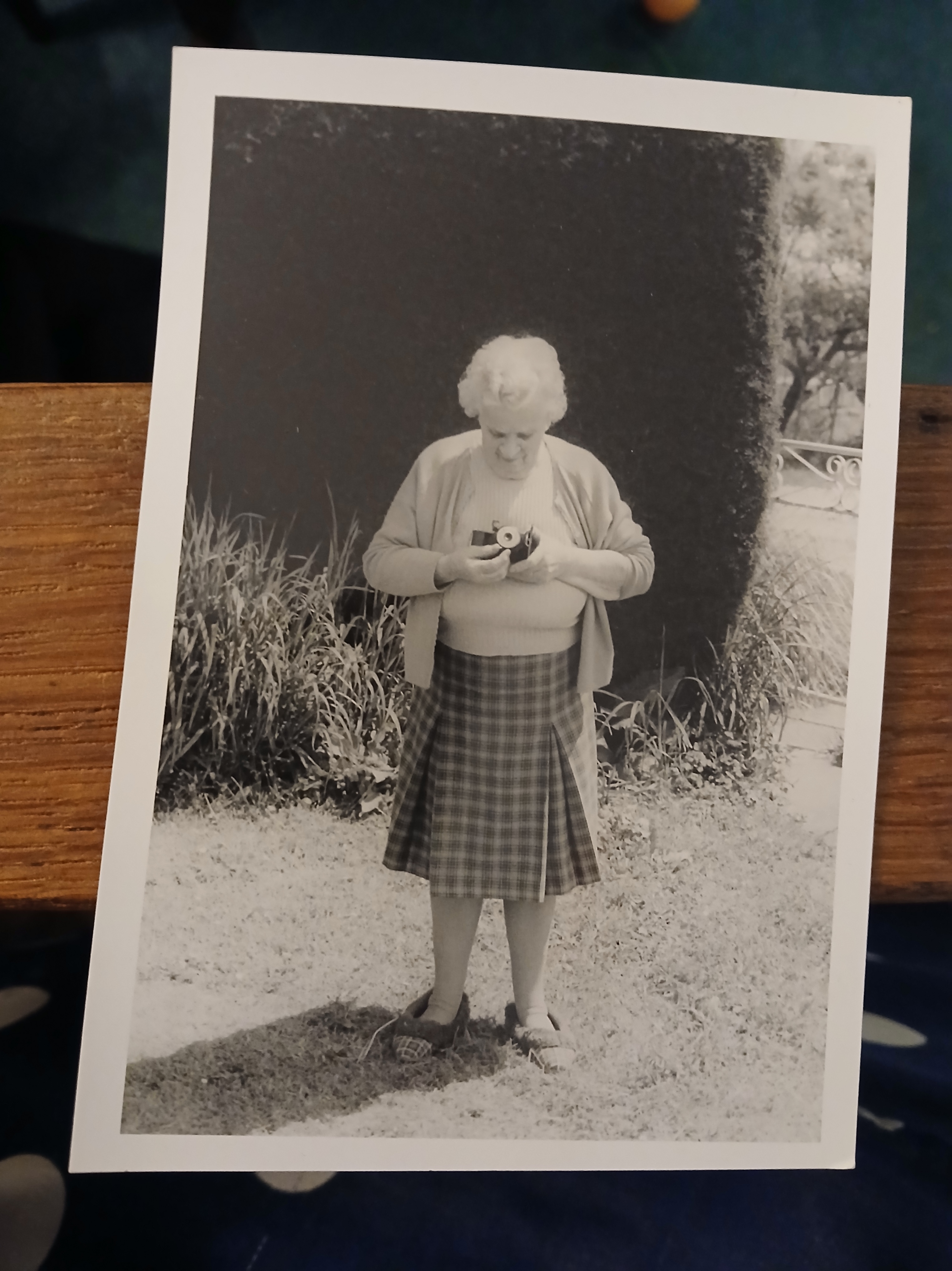
Figure Eleven: Lizzie taking a photo, Pahiatua

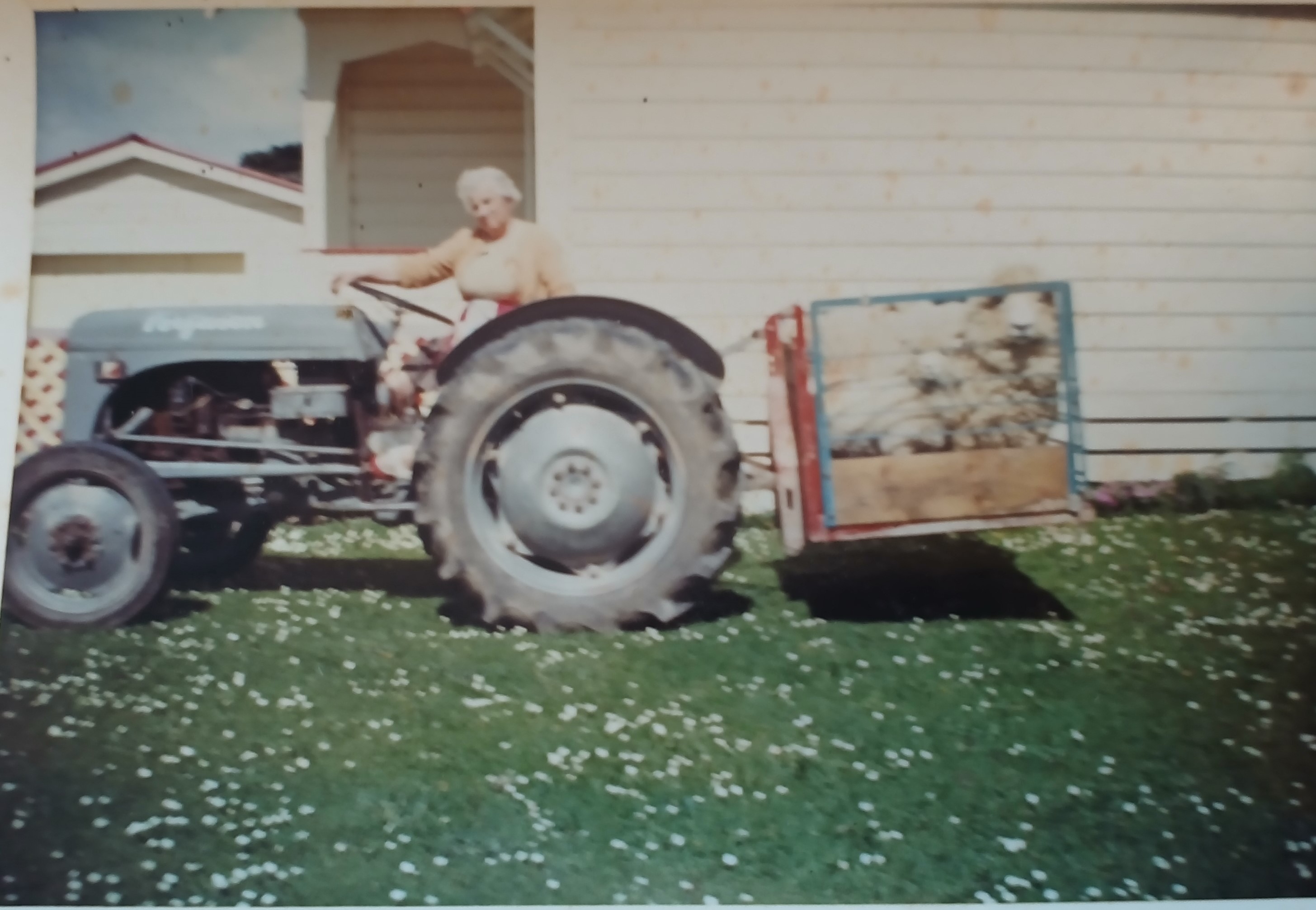
Figure Twelve: Lizzie transporting a sheep on the tractor, Pahiatua


[1] 1 pound = 20 shillings; 1 shilling = 12 pence; at decimalisation, £1 = $2. £100 in 1937 is equivalent in purchasing power to about £8,705.28 today, an increase of £8,605.28 over 88 years. The pound had an average inflation rate of 5.21% per year between 1937 and today, producing a cumulative price increase of 8,605.28%. This means that today’s prices are 87.05 times as high as average prices since 1937, according to the Office for National Statistics composite price index. A pound today only buys 1.149% of what it could buy back then. The inflation rate in 1937 was 3.75%. https://www.in2013dollars.com/uk/inflation/1937

The women of the clan Kelly, O’Grady and Dron

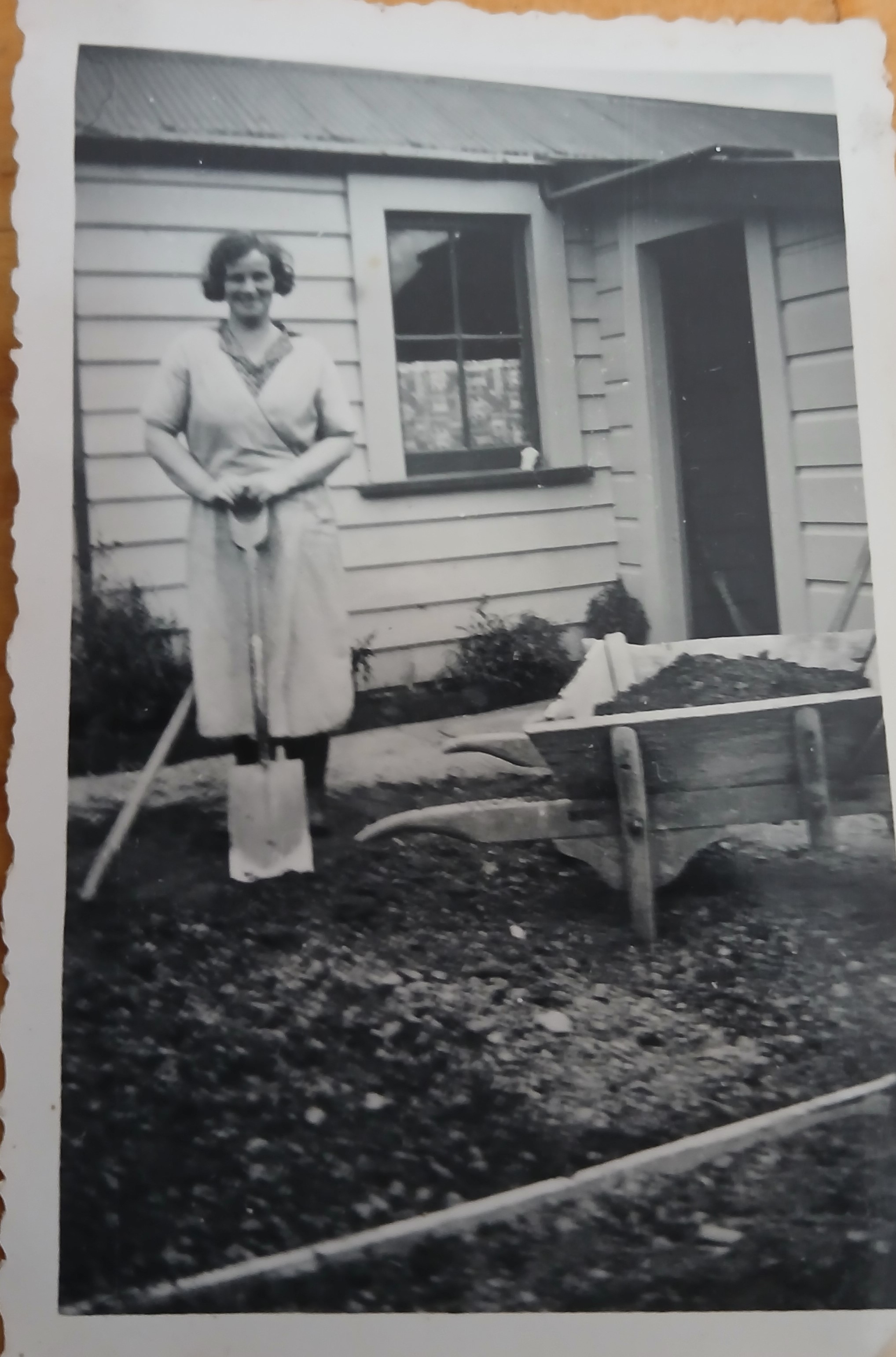
Lizzie Dron, née Kelly, portrait by her nephew John Eamon Kelly

I didn’t know many stories about my Pahiatua family, but I had been told my Great Great Uncle William Kelly had the first section which became the family farm. When I went to Archives NZ and looked at the block files for Mangahao XVIII, Special Village Settlement Sections 62 and 63 I learned this wasn’t true.

The first clan member to purchase a leasehold was Brigid O’Grady, and that story is told elsewhere in this blog https://kellyogradydronfamilyhistory.com/ogrady-dron-and-kelly-clan-pahiatua-special-village-settlement-sections-62-and-63/. Brigid had a daughter called Bridget and a son called James. They came to New Zealand in 1884, and Brigid started the process of purchasing a leasehold in 1888.

In 1891 her daughter Bridget married our Great Great Uncle William Kelly. We are yet to work out when or how he came to New Zealand from County Laoise, Ireland, but they were married in St Brigid’s Church, Pahiatua.

Presumably they lived on the farm with Brigid and James, who purchased the leasehold on the section over the road in 1899 but by 1903 was in the asylum, and again, that story is told elsewhere https://ndhadeliver.natlib.govt.nz/delivery/DeliveryManagerServlet?dps_pid=FL86498823 .

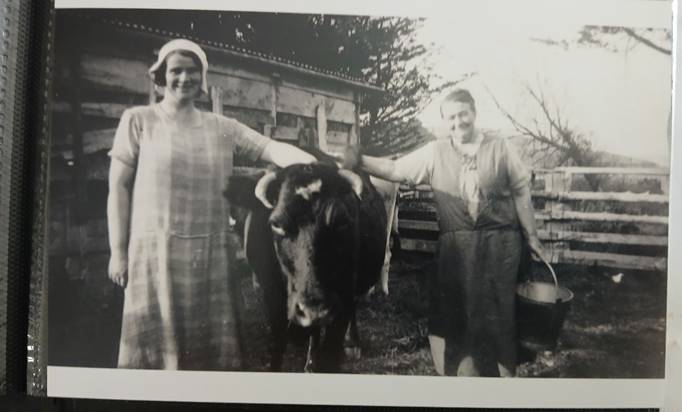
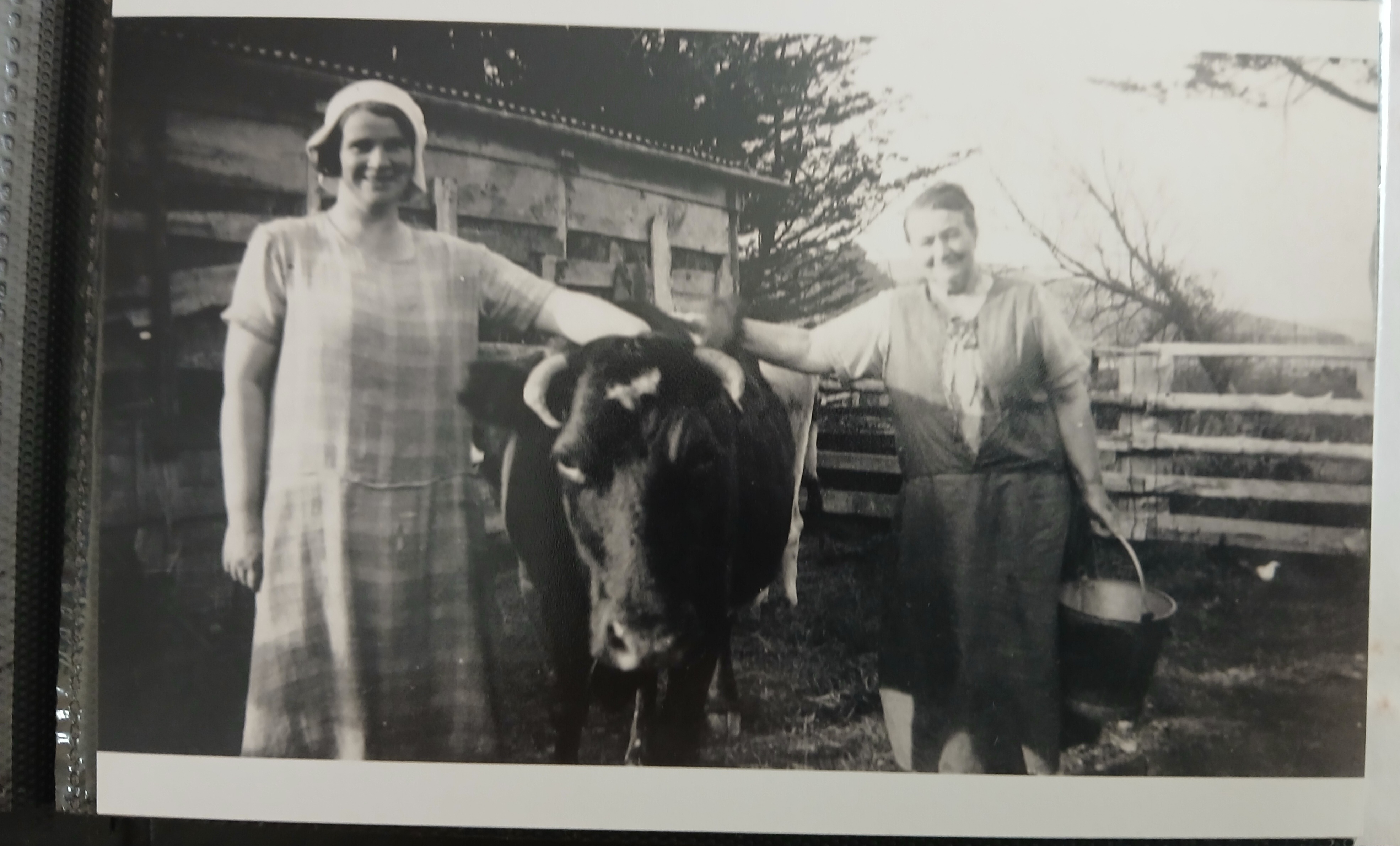
William died in the early 1920s, and Brigid O’Grady in 1922. Bridget Kelly carried on running the farm, but her husband William’s niece Elizabeth Mary Kelly came out from County Laoise to help. This was interesting timing as it was 1923, the end of the Irish Civil War. Lizzie hadn’t lived on a farm so far as we know ; she’d been raised by her parents who owned a bakery on Chapel St in Portarlington, County Laoise. But she appears to have adapted pretty well to farm life as you can see here, with a cow and her aunt by marriage Bridget Kelly.

Lizzie Kelly, a cow, Bridget Kelly holding the bucket.

We have photos from pretty early on showing the Dron family from Section 23 along the road and round the corner in the Pahiatua Special Village Settlement.

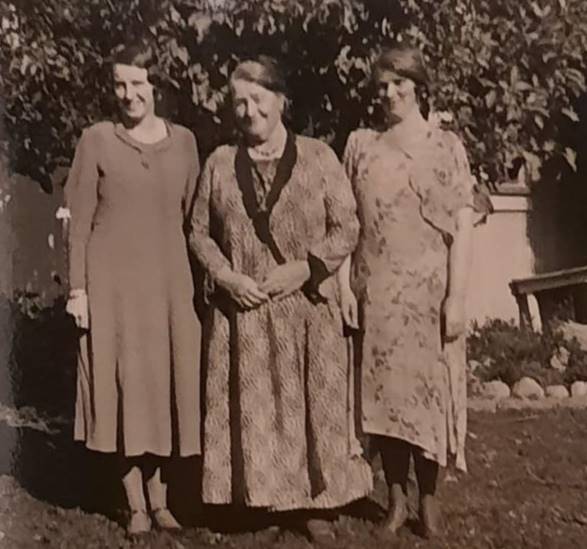
Lizzie Kelly, Annie Dron and Bridget Kelly in front of a car, looking like they are dressed up to go to town.

Actually, it turns out they were on an epic road trip around the North Island. When Lizzie came to live on the farm after her uncle William died, Bridget decided she wanted Lizzie to learn to drive. She asked the local car dealer to teach her, and intimated that if he did, she would buy a car from him. However he then saw the women driving round town in a car purchased elsewhere, so the car dealer took Bridget to court. She got off without a charge because there was no written contract according to Papers Past ‘Pahiatua Herald, Volume XXVII, Issue 3164, 3 April 1924, Page 5’.

The Dron family were of Norwegian stock, again referred to elsewhere on this blog. They only had 10 acres; a considerably smaller amount of farm than the Kelly/O’Gradys who had by the 1920s consolidated sections 62 and 63, so they had nearly 40 acres. The family ran dairy cows, and had pigs to feed the skim milk to.

When Bridget Kelly died in the early 1940s her obituary in the local paper was pretty epic:

 Obituary Manawatu Times, Volume 65, Issue 198, 22 August 1940, Page 4

MRS. BRIGID KELLY, OF MANGATAINOKA Mrs. Brigid Agnes Kelly, a well known resident of the Mangatainoka district, who passed away recently at the age of 68 years, was born at Tipperary, Ireland, in 1872, being a daughter of the late Mr. and Mrs. O’Grady. At the age of 13 years she left for New Zealand with her mother, her father having died. They arrived at Napier in 1885. From Napier, Mrs. O ’Grady and her daughter went on to Waipawa where they stayed for a short time before taking up their residence at Maharahara. In 1886 they removed to the Pahiatua district. Six years later the deceased lady was married to Mr. William Kelly and they took up farming at Mangatainoka where the late Mrs. Kelly had remained until her death. She was immensely popular throughout the district, being of a kindly and charitable disposition.  Besides being associated with the Women’s Institute movement at Mangatainoka, Mrs. Kelly was actively interested in anything connected with the good of the Pahiatua district. During the last war she received from the Red Cross Society a medallion for her sterling work. Her husband predeceased her twenty years ago and there was no family. Messrs. Michael Kelly (Wellington) and John Kelly (Frankton Junction) are nephews, while Miss Elizabeth Kelly (Mangatainoka) is a niece. At the funeral a large number of friends and relatives gathered to pay their last respects. The Requiem Mass in the morning and the service at the graveside were conducted by Rev. Father Cashman The pall-bearers were Messrs. Michael and John Kelly, both nephews of the deceased, Colin Dron, A. Pilkington, W. Tuohy, T. Murphy and C. Lett.

But it turned out that she hadn’t actually resolved ownership for her mother Brigid O’Grady’s property upon her death (it’s a bit confusing with their similar names, but Brigid is the one who died in 1922) and so it all had to be done for both of them at the time of Bridget’s death.

Those pall-bearers Michael and John Kelly (the author’s grandfather, whom we all called Jack) had to work out how to keep Lizzie on the farm, as Bridget had not passed it to her, as everyone expected. Despite the above obituary saying ‘there was no family’, that simply meant Bridget and William didn’t have kids. Bridget did leave money for her brother, unmentioned in the obituary, who was still in the asylum, and William and her own nieces and nephews. Lizzie and her mate from round the corner Colin Dron then decided to marry, and she was able to purchase the leaseholds for the farm. So that meant for the third generation of the family, the women were on the leasehold of the land. Colin was the final family member to live on the farm as he outlasted Lizzie by about twenty years, and in the 1980s he was able to convert the leasehold to freehold at last.

Colin Dron above, and Lizzie above him.

There are so many beautiful images of the families on the farms. The author’s grandmother Jean is in some photos sitting on the back of horse carts, and sometimes she’s on a motorbike! There’s Lizzie on the tractor, and taking a photo…it all looks so relaxed and joyous. The McGreevy and Kelly families visited often, and Colin and Lizzie took photos. We haven’t identified everyone yet, but we hope to when we visit Pahiatua Museum in April 2025 and catch up with some of the people who knew Colin and Lizzie.

Lizzie, Pam Kelly, Mike Kelly, Colin (1960/70s?)

Grandad Jack Kelly with Colin Dron outside the old shed

Lizzie holding Billy (now called Jack Kelly) and Jack (John) Kelly

Jack (John) Kelly and the Tonduff Ambush 1922

Our family are pretty lucky to have a family bible dated 1891 which contains many requiem mass cards which help us re-learn our family history.

Here’s an example, my great grandmother Mary Kelly’s requiem mass card.

Mary was my Grandad Jack’s mother. My Dad John and I were looking through the bible again recently, when we saw something we hadn’t noticed before. A little black folder containing a letter from 1933 with a black border, usually denoting a death, and a requiem mass card from 1922.

I’m pretty lucky to have some mates who are very good Irish diaspora historians, and so we showed the card to them. It does indeed seem to be the genuine requiem mass card for these four Republicans, part of the Anti-Treaty IRA who wanted to fight on to free all of Ireland once the English were driven out of the South.

We had long known Grandad Jack was involved in a particular ambush at Tonduff/Tunduff, where three Free Staters (National Troops) were killed. Grandad Jack was arrested and held in Portlaoise jail and then moved to the Tintown internment camp (according to Michael J. Rafter in ‘The Quiet County: Towards a History of the Laois Brigade I.R.A. and Revolutionary Activity in the County 1913-1923’ 2016, p.108). For those who, like me, don’t know their Irish Catholic culture, requiem mass cards (or memory cards) were made to distribute after the funeral. Grandad Jack was in jail at the time of the funeral, but others may have been to the requiem mass, and received a card at some point thereafter which they gave to Grandad Jack, who kept it, but that doesn’t explain how it got into the family bible, which was not in his keeping. His sister Lizzie Kelly wasn’t in jail, and came to New Zealand in 1923. She may have had the requiem mass card, and she lived in the house where the family bible was kept, but we just don’t know how it came to be in its pages. Jack was released from jail in 1923, and left Ireland. We’re not sure of his movements until he boarded the Athenic (third class passenger) and came to New Zealand from Liverpool in 1926.

The photos above are the back and front of a photo I’ve often wondered over. I had thought it was one of the more light hearted photos I had seen of Grandad as a young man. Jack is on the left, and the information on the back says ‘The present teacher, a Cork chap, S.Siney and A. Donegan’ are also pictured. An Irish Historian, Michael Rafter has had a look and let us know they are Stephen Siney and Aloysius Donegan who were also part of the IRA in Portarlington.

My Dad John then found another interesting article in Grandad Jack’s papers about the death of Lorcan Brady, a fierce Republican until he died in 1973. Someone had passed Lorcan (often called Lar, also Laurence)’s obituary to Jack who had again kept it.

It’s worth a read for the beautiful and romantic Fenian prose it contains:

Newspaper article found in Jack Kelly’s papers by John Kelly

Tribute to late Lorcan Brady

The big man is dead. One of the last of the chieftains of the O’Moore territory has gone to his reward. The descendants of the Seven Septs have laid the mortal remains of Lar Brady in their last resting place within view of Dunamace. Great their grief; great their memories.

From the day he went in the horse and trap with his father to his first football match in Ballyroan, to the day of his death, Lar was a devoted follower of the native games and through the years an ardent enthusiast in the promotion of the cause of Irish Independence, the development of the native culture and the Irish language.

How he loved the Clonad team, how he exhorted them, led them, praised them, defended them and promoted them. How proud we were of him as his commanding figure and well delivered addresses held the wrapt attention of delegates at convention or congress. He proved to be a man of presight too.

Remember the congress in the fifties when he appealed to congress to move Croke Park to the Phoenix Park and to provide the headquarters with its own air-strip etc? A man of courage, Lar fired the last shot in the controversial Ban issue in Belfast’s convention, true to his ideals to the last, integrity before popularity was always his motto.

Lar’s politics needed to be understood to be appreciated, he was a Fenian in the tradition of Clarke, a separatist like Tone, a visionary like Pearse. He gave his services fearlessly, unselfishly and unreservedly to the cause of a united independent Ireland. He with many old comrades where will now renew acquaintance all enjoy freedom which lasts.

The ideals of Davitt were perpetuated in Lar’s love of the land, a love so well enunciated by his neighbour James Fintan Lalor before him. His Christianity was reflected in his neighbourliness, in his devotion to duty and above all in his integrity.

How fitting that our hero should go to his eternal reward at Easter time, a time of rising, freedom and glory.

We shall miss him and remember him every time we enter O’Moore Park, an arena which will remain a monument to his love of the games of the Gael, as he loved to call them. I cannot help thinking of the happy re-union of our talented Laois Co. Board officials, Lar, Bob, Paddy, Sean, Johnny and Jack.

Our sympathy is extended to Lar’s sister, relatives, old comrades, G.A.A. [Gaelic Athletic Association] friends, neighbours and to all who were privileged to know him. Solus na bhfaitheas dá anam dílis [May the Light of Heaven Shine On His Faithful Soul].

                                                                        -CARA

Lar Brady is pretty well known, and some of his experiences are published online https://bmh.militaryarchives.ie/reels/bmh/BMH.WS1427.pdf

He too was involved in the Tonduff Ambush. Lar had been part of the 1916 uprising, while Jack was in the British army. When Jack eventually left the army and Home rule was not forthcoming, perhaps he was one of the many young men who felt he needed to take a side, or maybe he was forced to do so. After all, Jack was a Lewis Gun instructor, and in County Laoise, Lar tells us the IRA had several Lewis Guns. Jack was also a trained sniper.

Jack seems to have sent some photos to his brother Michael Joseph Kelly in New Zealand before he himself arrived in 1926, and one of them has been kept in an album with photos of his other siblings in Ireland. In it, Jack is wearing the uniform of the Republican army associated with the IRA and IRB (we don’t know if he was ever officially part of either organisation).

To be clear, I find this photo pretty troubling and wish it wasn’t my Grandad Jack, but it looks like him to us. So imagine our surprise when we had another look for Tunduff Ambush information online and found a memorial which has this photo, but says it’s someone else! https://www.tonduffambush.ie/the-ambush-overall/on-the-other-side-of-the-wall I would be very happy if it’s Michael Sheehy, but alas I don’t think it is.

Here’s a photo of Jack from that same family album with a photo of his sister. Maybe we’ll never know for certain, but given the context in which the photo with the pistol is sitting, in an album of Jack and his siblings, it’s unlikely it’s Michael Sheehy. [Update to this post, the Tonduff Memorial site agrees and will be updating their text accordingly.]

But that’s the difficulty with my Grandad Jack. He never spoke about what happened to him while fighting with the British at the Somme (we know he was wounded from his military record which my Uncle Michael researched) and he never talked about what happened when he went home. He was, apparently, a man of pretty few words.

What we do know for certain is that his Dad, also called John, died while Grandad Jack was still in prison and Jack wasn’t able to go to his funeral. Perhaps just punishment, he had been involved in the death of three Free Staters. But still, to me, a sadness, and one I imagine he carried all his life.

Thank you to Sean Brosnahan and Ewan Morris for their help with this – all errors however are my own. Feel free to contact me if you have further information or corrections! mjeankelly@gmail.com

There are related articles on Jack’s sister Lizzie and family on the Pahiatua farm which you may be interested in too https://kellyogradydronfamilyhistory.com/ogrady-dron-and-kelly-clan-pahiatua-special-village-settlement-sections-62-and-63/

Jack (John) Kelly

Jack (John) Kelly, born 21 August 1898 in County Laoise, Ireland, died in Taumarunui, 3 May 1980.

The following information has been sourced from various documents gathered by Michael and Pam Kelly (Sydney, Australia) including Birth Certificate, War Office Records, Newspapers, Military Archivist etc. and are held by Michael Kelly in Sydney. Pam Kelly helped with the project of collating the Kelly family history, and we’re extremely grateful to her for that work. John Kelly provided photos and information and Emma-Jean Kelly collated this current version. We’re very happy to have family feedback, so just contact the usual ways whānau!

Formal portrait of Jack Kelly as a young man

Photo of Jack Kelly as an older man by John Kelly

JOHN KELLY  (Known as Jack)

Date of Birth:                                 21st August, 1898

Place:                                              Kilmalogue (Portarlington)

District:                                           Cloneygowan

Registrars District:                       Mountmellick

Counties:                                       Kings & Queens

Birth Registered:                          1st October, 1898

Letter from Jack Kelly, ‘Dad’ to John, his son, describing some of the family back in Ireland.

‘Hello John, You are asking too much. I have never met my grandparents. My father John could have been over fifty when I was born. He was a baker and we had a store in Chapel St. Portarlington. His father lived in THE PYKE OF RUSHALL, Mountrath on a small farm with a lime kiln. His brothers were Denis (Royal Irish Constabulary), James, Fintan (sp?) killed in the Zulu War and William (?) drowned accidentally in Dublin Bay, also a Sister named Mary. My mother was a Mary Dunne from Tullamore. My family in order of age. Michael (Hawkes Bay Company Wellington Infantry Regt. Main Body) died 1943 aged 57. Mary Anne born 1888, Denis who died very young 1890, Alice died at 17 yrs 1892, Margaret 1894, Elizabeth 1896, Myself 1898, James (Civic Guards Inspector) 1900, William (Sergeant Civic Guards) 1902, Agnes 1904.

Sorry no more. A bit upsetting. Hope you can read it. Dates of all except Michael approximate. Father died 27th July 1923. Mother when Jean [his wife] was in the maternity home at Hamilton with Michael or Carole.

My love to Joan, Dad. P.S. Lizzie is a more reliable source of info. From her you will get details of your cousins in Ireland.’

Kelly family archive, Irish home with thatched roof, person unknown.

Kelly Family Home Address:     Bakery,

                                                          Portarlington

                                                          Queens County

Then known as:                            Chapel Street,

Later known as:                            Patrick Street,

                                                          Portarlington County Laois (AKA Kings and Queens).

3rd house from St.Michaels Church – next door to The Nook Grocery store.

Scholastic Achievements

1912     Intermediate Education Board for Ireland Certificate – Junior Grade.

Awarded an Exhibition of Fifteen Pounds in Group C.

                                                          Obtained Passes and Honours in:-

                                                          French, Arithmetic and Algebra, Geometry, History &

                                                          Historical Geography, and Experimental Science (Second

                                                          Year Course) and Passes in English and Irish.

1913                                                Intermediate Education Board for Ireland Certificate

                                                          Middle Grade

                                                          Obtained Passes and Honours in:-

                                                          French, Arithmetic and Algebra, Trigonometry and

Chemistry (Third Year Course) and passes in English, Irish

Mathematics and History and Historical Geography.

1914                                                Intermediate Education Board for Ireland Certificate

                                                          Middle Grade

                                                          Awarded an Exhibition of the Second Class in Group D.

                                                          Obtained Passes with Honours in:-

                                                          Arithmetic with Algebra, Geometry, Trigonometry,

Chemistry (Third Year Course) and Drawing (Third Year Course) and Passes in: English, French and Irish.

15th September, 1914                Intermediate Education Board for Ireland Certificate –

                                           Awarded to Mr. John Kelly, Christian Schools,

Portarlington, an Exhibition of Fifteen Pounds in Group D, Middle Grade.

1915     Intermediate Education Board for Ireland Certificate.

Senior Grade.

                                                          Obtained passes in:- English, French, Irish, Geometry and

Chemistry (Fourth Year course) and Passes with Honours

in: Arithmetic with Algebra and Trigonometry.

8th April, 1915                              Certificate of Employment During the War.

                                                          Regimental No:              13893

                                                          Rank:                                Corporal

                                                          Issued by 8th (Ser,) Bn, The Queens Own (Royal West Kent) Regt.

                                                          Trade or calling before enlistment:-      Teacher

                                                          Courses of Instruction:-

                                                          Snipers Course

                                                          General NCO;s Course 2 Army School

                                                          Military Qualifications:-

                                                          Marksman

Lewis Gun Instructor (Certificate)

4th October, 1915                        National University of Ireland Certificate.

                                                          Registered as a Matriculation Student of the University.

                                                          Having passed at the Senior Grade Examination of June,

1915 of the Intermediate Education Board for Ireland, in

the subjects of :-Irish, French, English, Mathematics and

Chemistry.

War Record

3rd August, 1916                          War Office.  Issued from Hounslow.

                                                          Date of Enlistment  to 1st Battalion, The Buffs.

                                                          Regimental No:              13893

                                                          Rank:                                Corporal

                                                          For Regiment/Corps to which first appointed:

A.S.C. (M.T.).  (Refer discharge document dated 24th February, 1919)

Note:  1st Battalion of the East Kent Regiment were formally known as the 3rd Regiment of Foot.

Jack Kelly bottom left, others unnamed

7th February, 1917                      Reply letter from:-  Intermediate Education Board of

Ireland.

J.K. requested Duplicate of Examination 1914 Certificate

                                                          Mailed to:-

Private J.Kelly No:16481 A Company,

104th T.R. Batt

Kings Park School’s

Edinburgh, Scotland.

22nd September, 1918               Second Army Central School of Instruction Report –

                                                          Report on 13893 A/l/Cpl Kelly J.

                                                          6th Division, 1st Battalion, The Buffs (East Kent Regiment)

                                                          Demonstration Course from 22/6/1918 to 22/9/1918.

                                                          Special Aptitudes: Fitted to promotion for the rank of Sergeant.

                                                          General Qualities: One of the smartest and best turned out

                                                          NCO’s in the platoon.  A selected man in demonstrations,

                                                          Intelligent, good word of command, keen on military subjects. 

Good at topography.  Should make a good leader.Good at recreational games.

Interest and Keenness: Took an intelligent interest and displayed great keenness in all his work

Progress:  Lewis Gun qualified as an instructor.

21st October, 1918                     War Office Report.

                                                          13893 L/Corporal – Kelly.J.

                                                          East Kent Regiment

                                                          Hospitalised to convalescent depot Rouen, France on

11th October, 1918 with Gunshot wound to the back

                                                          Mailed to:-  Mrs. Kelly, Bakery, Portarlington, Queens

County.

Extract from Correspondence from Bob O’Hara dated 9th July, 1988 -I know that the 1st Battalion of The Buffs were there on the first Day of the Somme and as John Kelly was in the 1st Battalion, I have copied some extracts from a published works of the war diary which will give you an idea of the locations.

24th February, 1919                    War Office Certificate. Issued from Hounslow.

Discharged and re-enlisted.

25th February, 1919                    Enlisted at Vettureius, Germany.

                                                          Special Qualifications (Military):-

                                                          Second Class Certificate of Education

                                                          Medals/Decorations:   Nil on present Engagement.

                                                          Wound Stripes:               Nil

13th July, 1920                              Infantry Record Office, No.10 District,

Staines Rd, Hounslow.

                                                          Medal Entitlement:

                                                          British War & Victory Medals

                                                          Service No:                     G/13893

                                                          Regimental No:              L/11632

                                                          Group:                WO/Class: 329/Piece: 667

                                                          Note:  The British War Medal was authorised in 1919 and was instituted to commemorate some of the most terrible battles the world has ever known.

The Victory Medal was also authorised in 1919 and was to mark the victory of the Allies over the Central Powers.

31st March, 1921                         Certificate of Discharge. Infantry records Hounslow.

                                                          Rank:  Corporal – 1st Battalion, The Buffs

                                                          Termination of Engagement Para 392 XX1 KR after

                                                          Serving 2 years 35 days with the colours.

                                                          Marks or scars: 2 scars, front right leg.

                                                          Height:                             6’ 4”

                                                          Complexion:                   Ruddy

                                                          Eyes:                                 Light Brown

                                                          Hair:                                  Light Brown

31st March, 1921                         Military Character Certificate. Infantry Records, Hounslow.

                                                          Rank:                  Corporal

                                                          1st. Battalion The Buffs.

                                                          According to records was very good, a sober, honest and

                                                          Hardworking man.

Letter above to Michael Kelly, youngest son of Jack Kelly.

During the Irish Civil War (1922 – 1923) John Kelly was the leader of the rebel opposition in Portarlington (possibly they were Fifth Battalion, Company B, according to the testimony of Laurence/Ler/Lorcan Brady). They were sometimes called ‘The Irregulars’ by Free Staters but were the Anti-Treaty IRA (Irish Republican Army) and they were in opposition to the Irish Free State Troops also known as the National Troops.

The following documents cover an ambush incident just South of Portarlington in which John Kelly was involved. Three National Troops were killed and many IRA participants including John Kelly were jailed for their part in the ambush.

29th July, 1922                              Report – Re Ambush of National Troops at Tunduff

between Maryboro and Abbeyleix. On the 28th July, 1922

                                                          By:                       S.Flynn I/O  – Headquarters Leix

No.1 Brigade

                                                                                      Kellyville Park, Maryborough.

                                                          Sent to:              Command I/O Curragh Command.

Flynn’s statement on the Tunduff Ambush Jack Kelly was involved in

Undated Report                          Powell’s Statement.   (National Army Officer) on

                                                          The ambush incident. FIRST PAGE

Undated Report                          Powell’s Statement.   (National Army Officer) on

                                                          The ambush incident. SECOND PAGE

22nd February, 1923, Ledger entry showing a list of those imprisoned during the

Civil War which includes John Kelly of Chapel Street, Portarlington.  Interned for two years presumably from 22nd February, 1923. Note:  Imprisoned at Maryboro now called Portlaoise.

Apparently these files also exist but are not included here:

Undated Report                            Newspaper Clipping giving the Jury’s verdict on the above

                                                          Coroner’s Report.

3rd August, 1922                          Freemans Journal Clipping (Newspaper)

                                                          Re: Coroners report at Port Laoghaire Courthouse into the

                                                          Covering the deaths of Colonel-Commandant

MacCurtin, Colonel-Commandant Collinson and volunteer

Grace killed in the ambush at Tunduff and subsequent operations at Raheen.

27th July, 1923                              During his imprisonment Jack’s father John Kelly died.

16th September, 1924                             Character Reference from:-

                                                          St.Michaels Church, Portarlington.

I have known the bearer John Kelly for some years.  He is the son of most respectable parents and I believe him to be an honest, sober and intelligent young man.

Signed, Eccles Paroch,  Portarlington.

An undated Certificate of Attainment – New Zealand Education Department, District of Canterbury also exists but is not included in this document.

After Ireland

After being released from jail, Jack left Ireland for Liverpool and then boarded the Athenic (third class passenger, Jack’s eldest son John Kelly has the passenger list) and came to New Zealand in 1926. He met Jean Rodger Martin, who lived in Christchurch and was from a Scottish Protestant family, although our cousin Helen has uncovered the fact that Jean’s grandmother Honora was Irish Catholic. The Kellys had understood Jean was exiled from the Martin family for falling in love and marrying an Irish Catholic. Certainly the Kelly children (of Jean and Jack) did not have contact with the Martins growing up, but John Kelly and Helen Martin, a cousin, became friends in adulthood and the families have been close ever since. Helen Martin has written the family history largely focused on the Martin side, it’s called ‘Roots’ and is highly prized in the family.

Honora Martin, Jean’s Grandmother with grandson Keith, Jean (seated in front) and Frances Martin (Keith and Jean’s mother).

Jack and Jean married in the Christchurch Catholic Cathedral in 1934. Jack joined the New Zealand Railways and the family then moved around depending on where he was needed, from Christchurch to Petone, Frankton Junction and Ngaio Wellington. Maureen was first born, followed by John, Michael and Carole. The children had holidays on the Pahiatua Farm where Jack’s sister Lizzie Kelly had lived since 1923.

Jean Kelly née Martin, Great Aunty Bridget Kelly née O’Grady and Lizzie Kelly (later Dron) at Pahiatua.

Lizzie Mary Dron (nee Kelly) with Colin Dron, looking smart in town.

Carole Kelly by John Kelly

John, Michelle (Pam and Michael’s daughter), Joan Kelly née Cook, Pam Kelly née Bourne, Marjorie and Douglas (Doug) Martin (Jean’s brother).

Grandma Jean Rodger Kelly (née Martin) as an older woman

Jack and Jean made their last home in a railway house in Taumarunui, Central North Island where the younger children Michael and Carole went to High School. They retired there, in their own home. Jean and Jack are buried together in the Taumarunui cemetery.

L-R Colin Dron, Jack Kelly, John Kelly, Maureen Hammer, Michael Kelly, Keith Martin (Jean’s brother, pictured as a child with his grandmother Honora, Jean and Frances earlier), Taumarunui for Jean Kelly’s funeral. Jean died 15 June 1978. Handwritten caption John Kelly. According to family lore, Jack died of a broken heart. He fell and broke his hip, which led to hospitalisation and complications.

Jack Kelly’s grave at Taumarunui, born Portarlington Ireland.

Jack Kelly smiling as an older man by John Kelly

L-R Back Row Joan Kelly holding Emma-Jean, Maureen Hammer, Janine Hammer and Unknown. Front row L-R Kate Sara and Patrea Joanne Kelly in garden of 16 Park Hill Road Birkenhead, Auckland.

Paola and Carole Raffinetti in South Africa

Sam Foley: Moving image paintings

20151207_115618

Tilting at the heart of the beast, 2012 (Berlin)

20151207_115600.jpg

Te Tahi Bay 2015

I first saw Sam Foley’s Berlin street scene at Pah Homestead in Auckland in 2012 where it won a  Wallace Art Award. This, along with images of Titahi Bay and other familiar places are included in this fine exhibition at Pataka. The combination of oil painting, projection and sound really works in this space. I must however point out that my partner Jay Hollows is Gallery Supervisor and helped Sam with the technical set up. So I have a bias, but this work is still really stunning.


James Harcourt – Climate Change Refugees, Pātaka Art Gallery & Museum

Today I chanced upon a performance in the spine (the central walk through area) of Pātaka Art Gallery & Museum in Porirua. It was part of James Harcourt’s exhibition in the Toi Gallery, with a climate change theme. Dancers and drummers wearing masks performed a choreographed routine. The masks are the feature of the exhibition, and are painted on nikau palm. They really look quite brilliant. They represent climate change refugees, human and animal, to ask ‘where are we going?’ Well worth a visit, and check out the Whitireia Grad exhibition and the Wallace Art Awards as well as the social history ‘Made in Porirua’ while you’re at it.

Pataka James Harcourt (31)Pataka James Harcourt (29)Pataka James Harcourt (30)Pataka James Harcourt (28)

Collectors II: Walter Cook – ceramics collector Wellington

I knew nothing about this Walter Cook collector whose pieces are on display at Te Papa on level 6. He is a librarian who started a collection of pottery and ceramics inspired by his reading of William Morris of the Arts & Crafts movement. Morris’ most famous line:

“Have nothing in your house that you do not know to be useful, or believe to be beautiful.”
I like the fact that Te Papa has featured the collector (a short video with him talking about the collection is included). The only thing that alarmed me somewhat was that some of these pieces looked like things my Mum had in her house which we threw out after she died – I hope they weren’t Liberty & Co or Royal Doulton!

Collectors I- Contraception & Carmen

Dame Margaret Sparrow has been a doctor for many years with Family Planning, and in her role as educator has collected different kinds of contraception over time. That collection is on display at Te Papa Museum in Wellington in the Illot Room on the fourth floor at present. Very interesting to see the changes over time in the presentation of condoms, in the devices used on women (I cringed looking at some of them) and the advice the public has written and displayed for their younger selves. A nice short video of Dame Margaret Sparrow talking about her work too. Shame it’s a small space tucked away, but I felt there was some nice synchronicity in having a display of Carmen’s head dresses outside, with her comment that she was ‘trisexual’ because she’d try anything. Carmen was a legendary entertainer who ran two very successful bars (or ‘coffee houses’) in Wellington. She died in Sydney, but left chosen materials to Te Papa.

20151119_161914[1]